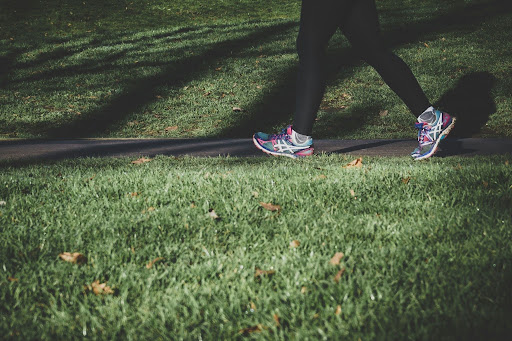

A step counter can turn an ordinary day into a number. One morning, it shows a few thousand steps; by evening, errands, a commute and a walk with a friend have pushed the total much higher. Alongside tracking movement, that number can prompt a useful question: how are the shoes holding up to the day?
Step counts do not diagnose foot problems or reveal whether a particular shoe is right. But they can help people notice how much walking their routines involve, and whether their footwear suits it. A pair that feels fine for a short trip may tell a different story after several hours on hard pavements or an uneven trail.
Read the pattern, not just the number
There is no single daily step target that tells every person whether they are active enough. Research has found links between higher step counts and health outcomes, but results vary by population and the outcome measured. A 2023 meta-analysis on daily steps and cardiovascular health reported that health benefits appeared across a range of step counts, with risk reductions continuing as daily totals rose. That does not make a particular number a universal goal.
The week’s pattern may be more revealing than one high or low day. A person who gets most of their steps at work may need footwear suited to standing and walking for long stretches. Someone who records more steps on weekend outings may need a comfortable everyday pair plus shoes designed for longer walks or hiking.
The U.S. Centers for Disease Control and Prevention’s activity guidance focuses on time spent in moderate or vigorous activity, rather than making step counts the only measure of movement. Brisk walking can contribute toward the recommended weekly activity, but a step total does not indicate pace, terrain or how a person feels while moving.
That context matters for shoes. A high number accumulated through short walks on flat indoor floors may call for different footwear than the same total built up on hills, gravel or city streets. The step counter records quantity, not whether a shoe is gripping well, rubbing at the heel or leaving enough room for the toes.
A simple way to use the number is to compare it with how the feet feel at the end of a typical day. Are there recurring hot spots, blisters, soreness or a sense of fatigue? Does the discomfort show up only after a long walk, or also after ordinary errands? Patterns like these can guide a closer look at fit and shoe condition.
Match shoes to the steps being taken
For everyday walking, a shoe should feel secure and comfortable, with enough room for the toes and no repeated rubbing. The American Orthopaedic Foot & Ankle Society’s guide to selecting athletic shoes recommends fitting shoes to the larger foot and walking in them before buying. A step counter can help a shopper estimate how often a pair will be used, but it cannot replace trying it on.
People who spend many steps on their feet at work may prioritize a secure fit, suitable cushioning and a design that meets any workplace requirements. Those who walk outdoors on rough or sloping ground may need footwear with more coverage and a sole suited to that terrain. For that kind of outing, comparing women’s hiking shoes and boots can be a practical starting point, with the eventual choice depending on the route, weather and personal fit.
A step total can also signal when the same pair is being asked to do too much. Everyday sneakers may work well for commuting and errands, while regular running, long-distance walking or hiking may call for footwear made for that activity. A specialist shoe is not automatically necessary for every person, but using one pair for every surface and purpose can make it harder to find the right balance of comfort, grip and support.
The shoe itself may change as it is worn. Tread can become smooth, cushioning may feel less responsive, and seams or uppers can loosen. If discomfort increases even though the daily routine has not changed, checking the shoes’ condition is a sensible first step.
Fit can shift as well. Feet may swell over the day, and socks or orthotics affect how a shoe feels. The Royal College of Podiatry’s footwear advice for walking recommends trying shoes with the socks used for walking and checking the fit before wearing them outdoors.
For people aiming to become more active, a gradual increase can make changes easier to judge. Someone who has recently added longer walks may notice that their old shoes are worn or uncomfortable; another person may find that a new pair needs a different fit or more room. If pain persists, worsens or changes the way someone walks, a podiatrist or other healthcare professional can help assess what may be contributing.
A daily step count is most useful as a prompt, not a scorecard. It can reveal whether the day is mostly sedentary, built around work on hard floors or punctuated by longer outdoor walks. Pairing that information with comfort, fit and terrain can help people make more informed footwear choices, and decide whether a shoe is suited to the steps their life actually involves.