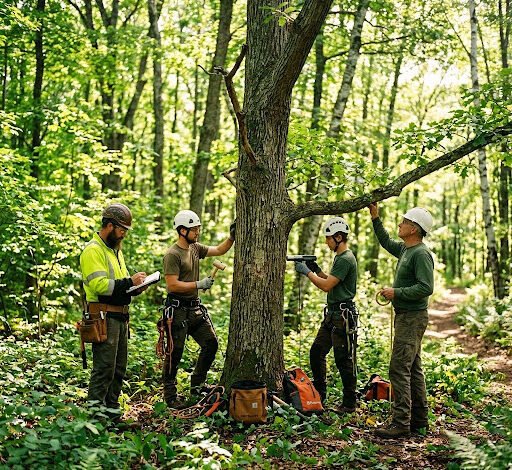

Trees rarely announce trouble the way a burst pipe or a cracked windshield does. Instead, they whisper their distress through subtle signs: a few yellowing leaves, a slight lean, bark that flakes a little too easily. By the time these symptoms become obvious, the damage is often well underway. That’s why understanding the condition of your trees before problems escalate is one of the smartest investments a property owner can make.
At Arborwright Tree Care, we’ve seen firsthand how a proactive approach to tree wellness saves homeowners and businesses thousands of dollars in emergency removals, property damage, and liability claims. More importantly, it preserves something that took decades to grow and can never truly be replaced overnight. This post walks through why tree condition matters, what warning signs to watch for, and how professional evaluation protects your landscape for years to come.
What Makes Trees So Vulnerable to Hidden Problems?
Trees look sturdy, but their internal systems are surprisingly delicate. Root systems can be compromised by soil compaction, construction work, or changes in drainage patterns, all without a single visible symptom above ground. Fungal infections can hollow out a trunk from the inside while the bark still looks intact. Insect infestations, like emerald ash borer or bark beetles, often go unnoticed until an entire canopy begins to thin.
Weather adds another layer of complexity. Drought stress weakens a tree’s natural defenses, making it more susceptible to disease. Heavy storms can create microfractures in limbs that aren’t visible from the ground but pose a serious risk during the next high wind event. Because so many of these issues develop below the surface or high in the canopy, they’re easy to miss during a casual glance out the window.
What Are the Warning Signs of a Struggling Tree?
While some problems are hidden, trees do offer clues if you know where to look:
- Unusual leaf discoloration or early leaf drop, especially when it’s isolated to one tree or one side of a tree
- Cracked, peeling, or missing bark, which can expose the tree to pests and disease
- Mushrooms or fungal growth at the base, often a sign of root decay
- Deadwood in the canopy, which increases the risk of falling branches
- A noticeable lean that wasn’t there before, particularly after heavy rain
Spotting one or two of these signs doesn’t necessarily mean a tree is beyond saving. In many cases, early intervention through pruning, soil treatment, or pest management can restore a tree to full vigor. The challenge is catching these signs before they become severe, which is exactly where a trained eye makes all the difference.
Why Do Professional Evaluations Matter So Much?
It’s tempting to assume that a tree is fine simply because it’s still standing and producing leaves. But appearances can be deceiving. A tree can look healthy from a distance while suffering from internal decay that compromises its structural integrity. This is particularly dangerous for trees near homes, driveways, or areas where people frequently walk.
Professional arborists bring specialized knowledge that goes well beyond a visual scan. They understand species-specific vulnerabilities, recognize the early stages of common diseases, and know how to interpret subtle cues that most property owners would overlook entirely. This expertise transforms guesswork into an informed, actionable plan.
Choosing professional evaluation over a DIY inspection makes the most sense when a tree is large, mature, or located near structures, power lines, or high-traffic areas. For smaller, younger trees in open spaces, routine visual checks by the homeowner may be sufficient between professional visits.
How Arborwright Tree Care Protects Your Landscape
A thorough tree health assessment provides clarity and peace of mind by identifying risks before they become costly emergencies. Our certified arborists examine everything from root stability and canopy density to bark condition and pest activity, building a complete picture of each tree’s overall well-being. Rather than offering a generic checklist, we tailor our evaluation to the specific species, age, and environment of your trees, since a mature oak and a young maple face very different risks.
Once the evaluation is complete, we walk you through our findings in plain language, with no confusing jargon or vague recommendations. If a tree needs pruning to remove deadwood, we’ll explain why and what to expect. If root damage is putting stability at risk, we’ll outline realistic options, whether that means treatment, structural support, or in rare cases, removal. Our goal is always to preserve as much of your landscape’s natural beauty as safely possible.
Beyond the immediate findings, our team also provides guidance on long-term care: watering schedules suited to your soil type, mulching techniques that protect root zones, and seasonal maintenance that keeps trees resilient against future stress. This ongoing partnership approach means you’re not just fixing a problem once, but building a landscape that continues to thrive year after year.
Protect What Took Years to Grow
A mature tree adds shade, value, and character to a property in ways that are difficult to replace quickly. Waiting until visible damage appears often means missing the window when treatment could have made the biggest difference. Scheduling regular evaluations, especially after severe weather or construction near your property, gives your trees the best chance at a long, healthy life.
If it’s been a while since your trees had a professional check-up, now is a good time to change that. Reach out to Arborwright Tree Care to schedule a visit, and let our team help you protect the landscape you’ve worked so hard to grow.