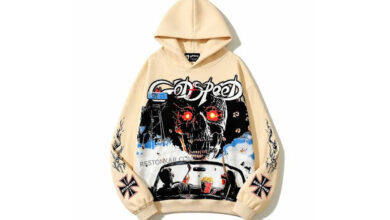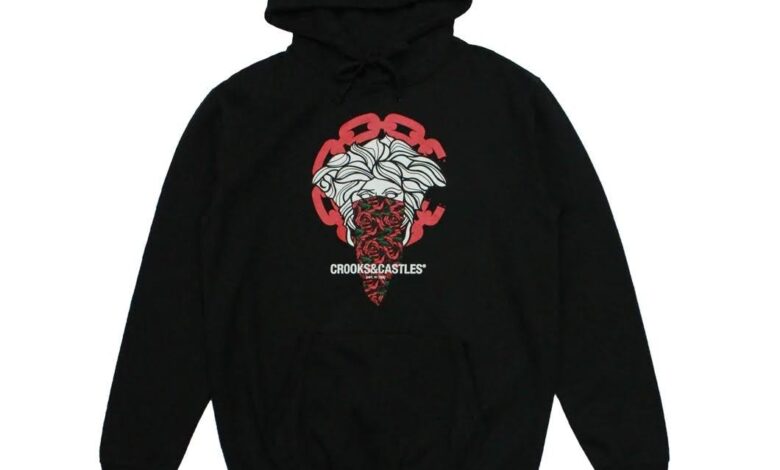

Six letters in that dropdown and honestly not one of them has a number sitting behind it – S, M, L, XL, XXL, XXXL, and that’s your lot. I went digging for a chest figure on the hoodie pages at Crooksncastles, then the sweatshirts, then the tees, and nothing turned up: no chest, no waist, no body length, no sleeve, and no fabric weight printed anywhere either.
So picking a size here ends up being a guess with a bit of reasoning propped behind it, which is more irritating on a CA$99 to CA$300 order than it would be on a cheap one. The way round it barely involves the website at all. It mostly involves something already hanging in your own closet.
The dropdown is the entire size guide
Six options, nothing behind them. Plenty of shops hide a chart behind a small grey link under the Add to Cart button, or shove it down into a description tab where nobody looks, so I went poking around in both of those spots on a Claw 02 Hoodie and then again on a Greco Medusa Tee. Nothing came up. The measurements simply aren’t out there, and borrowing a centimetre figure off some other site to plug the hole would be a good deal worse than just admitting the hole is there.
What a letter is really telling you
A size letter is a label somebody at the factory picked, and that’s about the extent of it. It isn’t a standard, it doesn’t travel from one label to the next, and across the five sections Crooks and Castles splits its catalogue into – tees, hoodies, sweatshirts, shorts and sweatpants – you’ll find one L genuinely doesn’t behave like the L sitting beside it, because the cut underneath the label keeps shifting around on you.
What helps is that the product titles tend to say the quiet part out loud. A sweatshirt called CRKS Dolman Boxy Sweatshirt, or Gothic Elite Oversized Sweatshirt, has pretty much told you how it means to hang before you’ve even opened the page. Streetwear pieces get drafted with room built into them, usually on purpose, and those three words in the title end up pulling more weight for your decision than a chart would – which sounds backwards, I know, but there it is.
The tape measure you already have
The reference garment wants to be the hoodie or sweatshirt that already sits the way you’d want a new one to sit, laid flat on a bed rather than measured on you. From there it’s a few numbers that I’d stick in my phone rather than trust to memory. Armpit to armpit across the flat garment gives you half the chest, so you double it, and that doubled figure is the one that really settles whether a pullover reads close or roomy on you. Shoulder seam down to the hem is body length, and on anything boxy that one matters a good deal more than the chest does. Shoulder seam out to the ribbed cuff is your sleeve, which is the measurement that quietly catches out taller buyers more than anything else on the list.
Weight is the blind spot in all of this, mind. The site says nothing about how heavy the fleece on a pullover runs, so two hoodies wearing the same letter can feel completely different across the shoulders and there’s no figure anywhere to warn you about it in advance. A drawcord turns up in the photo clearly enough. Grams never do.
What a product photo can and can’t settle
On a chartless site the photos are doing a lot of heavy lifting, and they’re better at it than people tend to give them credit for. Proportion reads clearly enough – a sleeve running halfway down the hand, a shoulder seam dropping well past where your own shoulder actually ends, a hem sitting at the hip instead of above it. That’s all visible, and it’s the sort of thing a chest measurement wouldn’t have told you anyway.
Scale is where it falls apart. You’d want the size that’s in the shot alongside the height of whoever is wearing it, and that pairing is more or less exactly what a listing with no chart leaves out, so a roomy-looking pullover might genuinely be roomy or might just be a medium on somebody small. That part is unknowable. Two listings can share a colourway and still hang nothing like one another.
Boxy, dolman and oversized change the math
| Word in the title | What it tends to do to the fit |
| Boxy | Goes wide before it goes long, so the hem usually lands a bit higher than you’d guess |
| Dolman | Sleeve cut in one with the body, which leaves the armhole deep and fairly loose |
| Oversized | All of it at once and on purpose, so even a letter down can still read roomy |
How I’d place the order myself
If it were my cart I’d work through it roughly in this order, and it isn’t very scientific. Flat measurements off a hoodie I already like, then a slow look at the photos for proportion, then back to the product title to see whether a cut word is hiding in it, and the dropdown comes last of all. When two sizes still look equally plausible after that, I let the cut word break the tie instead of the letter – a boxy piece at my usual size, an oversized one I’d think about a fair bit harder. And if none of it resolves, there’s always support@crooksncastles.ca, which is the address the site gives.
| Pro Tip: A phone photo of your own hoodie laid out flat with a tape beside it, left sitting in your notes, is worth more than it sounds – every later order from a shop with no chart turns into a two-minute comparison rather than another fresh guess. |
Questions that keep coming up
Is there a size chart anywhere on the site?
No, not that I could find – not on the product pages, not in a tab, not down in the footer either. Six letters in a dropdown and that really is the lot, which is more or less why the measuring business above exists at all.
Does XXXL mean the same thing on a tee as it does on a sweatshirt?
Probably not, and with nothing published there’s no figure to settle the argument either way. A tee and a heavier pullover come off different patterns, so I’d treat them as two separate decisions and measure a tee against a tee I already own.
None of this is as tidy as a proper table of centimetres would have been, and I’d much rather Crooks and Castles put one up on the product pages. Until they do, a tape measure, one garment you already trust and a slow ten minutes with the photos will land you a fair bit closer than a chart half the internet skims past anyway. Have a scroll through the catalogue with your own numbers written down beside you, and the guesswork drops off quickly.