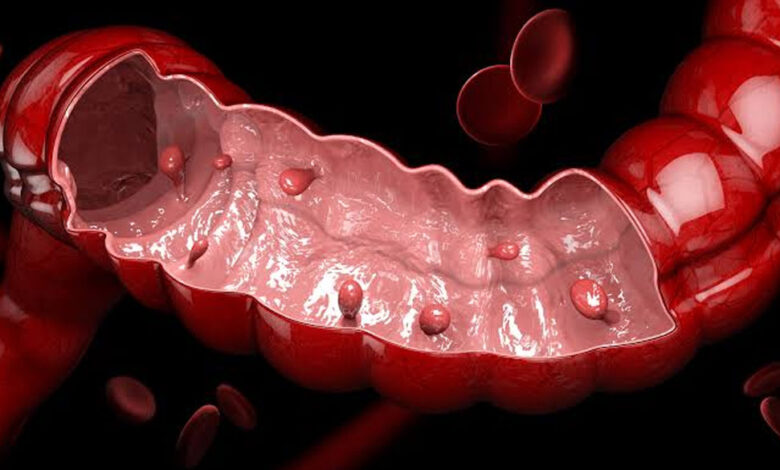

Colorectal cancer is one of the few cancers that can often be prevented, not just detected early. The key lies in small growths called polyps. Here’s how they develop, and how stopping them can stop cancer.
A Cancer With a Long Head Start
Most cancers are hard to catch before they form. Colorectal cancer is different. In most cases, it doesn’t appear overnight. Instead, it begins as a small, harmless-looking growth on the inner lining of the bowel, called a polyp.
Over many years, some of these polyps slowly change and can eventually turn into cancer. That long timeline creates a valuable window of opportunity. If polyps are found and removed during this window, the cancer may never develop at all.
This is why colorectal cancer screening is so powerful. It’s not just about finding cancer early; it’s about preventing it altogether.
What Are Colon Polyps?
A polyp is a small clump of cells that grows on the lining of the colon or rectum. Polyps can be flat or raised, and they range in size from a few millimetres to several centimetres.
Polyps are very common, especially as people get older. Most cause no symptoms, which is why many people don’t know they have them.
Not all polyps are the same
There are several types of polyps, and some are more likely than others to become cancerous.
- Adenomas (adenomatous polyps) – the most common type of precancerous polyp. Not all adenomas become cancer, but most colorectal cancers develop from adenomas
- Sessile serrated lesions – often flat and harder to spot, these can also develop into cancer
- Hyperplastic polyps – usually small and generally considered low risk, especially in the lower bowel
- Inflammatory polyps – often associated with inflammatory bowel disease, and usually not precancerous themselves
Size and features matter
In general, larger polyps, those with certain microscopic features, and people with many polyps carry a higher risk of developing cancer.
How a Polyp Becomes Cancer
The journey from polyp to cancer usually takes many years, often a decade or more. During this time, the cells in a polyp gradually accumulate genetic changes:
- Normal lining – healthy cells line the bowel
- Small polyp – cells begin to grow abnormally, forming a small polyp
- Larger polyp – the polyp grows, and the cells become more abnormal
- Early cancer – abnormal cells start to invade the bowel wall
- Advanced cancer – cancer may spread to lymph nodes or other organs
Not every polyp follows this path. Many never become cancerous. But because it’s impossible to tell which ones will, doctors usually remove polyps when they find them.
Who Is More Likely to Get Polyps?
Anyone can develop polyps, but the risk is higher if you:
- Are 50 or older – the risk increases with age
- Have a family history – of polyps or colorectal cancer
- Have had polyps before
- Have inflammatory bowel disease – such as ulcerative colitis or Crohn’s disease
- Have an inherited syndrome – such as familial adenomatous polyposis (FAP) or Lynch syndrome
- Smoke or drink alcohol heavily
- Are overweight or physically inactive
- Eat a diet high in processed and red meat and low in fibre
Signs of Polyps
Most polyps don’t cause symptoms. Occasionally, larger polyps can cause:
- Rectal bleeding
- Blood in the stool
- A change in bowel habits
- Anaemia from slow bleeding
- Mucus in the stool
Because polyps are usually silent, screening is essential, even if you feel well.
How Polyps Are Found and Removed
Colonoscopy
A colonoscopy is the most effective way to find and remove polyps. A thin, flexible tube with a camera is passed through the rectum to examine the entire colon.
If polyps are found, they can usually be removed during the same procedure, a process called polypectomy. Small polyps are typically snared or cut away using tiny instruments passed through the colonoscope. You won’t feel this, as the bowel lining doesn’t sense cutting the way skin does.
The removed polyps are sent to a laboratory to check their type and whether any abnormal or cancerous cells are present.
Other screening tests
Tests such as the faecal immunochemical test (FIT), which looks for hidden blood in the stool, can help identify people who may have polyps or cancer. If a FIT result is positive, a colonoscopy is needed to look for the cause and remove any polyps.
Larger or complex polyps
Some large or flat polyps may need advanced endoscopic techniques to remove them. Occasionally, surgery may be recommended if a polyp can’t be safely removed during colonoscopy, or if it contains cancer.
After Polyp Removal
Your doctor will review the laboratory results with you and recommend when you should have your next colonoscopy. This depends on:
- The number of polyps
- Their size and type
- Whether any abnormal cells were found
- How completely they were removed
- Your family history
Some people need a repeat colonoscopy within a few years, while others can wait longer.
Screening Recommendations in Singapore
For people at average risk, colorectal cancer screening is generally recommended from age 50. Options include:
- FIT – a simple home stool test, usually done yearly
- Colonoscopy – usually every 10 years if normal
People at higher risk, such as those with a family history, may need to start screening earlier and have colonoscopies more frequently.
Lowering Your Risk of Polyps and Cancer
Alongside screening, healthy habits can help:
- Eat plenty of fibre – vegetables, fruits, whole grains and legumes
- Cut back on processed and red meat
- Exercise regularly
- Maintain a healthy weight
- Limit alcohol
- Stop smoking
Prevention Is Within Reach
Colorectal cancer is common, but it’s also one of the most preventable cancers. By finding and removing polyps before they turn into cancer, screening can save lives. If you’re due for screening, or have symptoms or risk factors, don’t put it off.
Consult a colorectal surgeon about colorectal cancer screening and polyp removal if you’re 50 or older, or at higher risk.
This article explains general concepts about polyps and colorectal cancer prevention. Your screening plan should be tailored by a doctor to your individual risk.