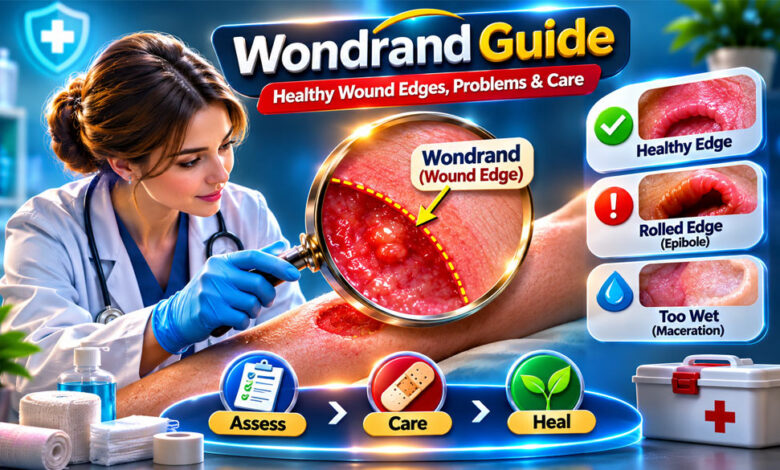

Wondrand is a Dutch word that means wound edge or wound margin. It is the border where an open wound meets the skin around it.
You may see the word Wondrand in Dutch medical records, nursing notes, or wound-care information. It may sound like the name of a disease or treatment, but it is not. It simply describes one part of a wound.
The wound edge can give useful information about how a wound is healing. Doctors and nurses may look at its shape, moisture, condition, and changes over time.
This guide explains what Wondrand means, what a healthy wound edge may look like, common wound edge problems, and when medical help may be needed.
What Does Wondrand Mean?
Wondrand means wound edge in Dutch. It is the border between an open wound and the skin around it.
The word has two parts. Wond means wound, while rand means edge, border, or margin. The plural is wondranden, which means wound edges.
In English medical information, you will usually see terms such as wound edge or wound margin instead of Wondrand.
The word may appear in Dutch nursing notes, medical records, wound assessments, and healthcare information.
There is also a similar German word, Wundrand, which has the same basic meaning. However, the spelling is different.
Wondrand is not a disease, medicine, cream, medical device, or treatment. It is simply the name for an area of a wound.
Why the Wound Edge Matters
The wound edge can give healthcare professionals useful information about healing.
As a wound heals, new skin cells can move from the edges across the wound. This process is called epithelialization.
If the wound becomes smaller and new skin starts forming, this can be a sign of healing.
Doctors and nurses may also check whether the wound edge is too wet, dry, thick, rolled, damaged, or separated from the tissue underneath.
However, the wound edge does not tell the whole story.
A healthcare professional may also check the wound’s size, depth, drainage, pain, surrounding skin, blood flow, and other health conditions.
For this reason, the Wondrand should not be used alone to decide if a wound is healing well or has an infection.
Wound Edge vs. Wound Bed vs. Periwound Skin
A wound has several areas that may need to be checked.
| Area | What It Means | What May Be Checked |
|---|---|---|
| Wondrand (wound edge) | Border of the wound | Moisture, rolling, thickening, attachment, and undermining |
| Wound bed | Open area inside the wound | Tissue, moisture, drainage, and dead or healing tissue |
| Periwound skin | Skin around the wound | Swelling, irritation, moisture damage, and skin changes |
These areas are different, but problems in one area can affect another.
For example, too much wound fluid can make the wound edge and nearby skin soft and weak. Pressure or rubbing can also damage the wound edge.
This is why healthcare professionals usually look at the whole wound instead of only checking the Wondrand.
How Wound Edges Change During Healing
Wound healing happens in several stages. These stages can overlap, and the wound edge may change as healing continues.
Hemostasis
Hemostasis starts soon after an injury.
The body’s first job is to stop the bleeding. Blood begins to clot and helps protect the injured area.
The wound edge may look different depending on how the injury happened.
Heavy bleeding or a deep wound needs medical attention.
Inflammation
Inflammation is an early part of healing.
The body sends immune cells to the injured area to deal with damage and possible germs.
Some warmth, tenderness, or swelling may happen during early healing.
However, these symptoms should not keep getting worse. Increasing pain, swelling, pus, fever, or redness or discoloration that spreads may need medical attention.
Proliferation and Epithelialization
During this stage, the body starts making new tissue.
Granulation tissue helps fill the wound. New skin cells also begin moving across the wound surface.
This process is called epithelialization.
New tissue near the wound edge may look thin and delicate. Its color can vary from person to person.
As healing continues, the wound may slowly become smaller and its edges may move closer together.
Remodeling
Healing continues even after the wound closes.
During remodeling, the repaired tissue slowly becomes stronger.
Newly healed skin can still be weaker and more delicate than normal skin. It may need protection from rubbing, pressure, and unnecessary movement.
What Can a Healthy Wound Edge Look Like?
There is no single color or appearance that always means a wound edge is healthy.
A healing wound may show new skin growing across the surface. The wound may also slowly become smaller as its edges move inward.
The edges may remain connected to the tissue underneath instead of forming spaces or pockets.
It is often more useful to look at how the wound changes over time rather than judging it from one day or one photo.
Skin tone can also affect how healing tissue looks. Lighting, blood flow, dressings, wound type, and the healing stage can change its appearance.
This means you should not use color alone to decide if a Wondrand is healthy or infected.
Common Wound Edge Problems
Several problems can affect wound edges. These problems can sometimes slow healing.
Maceration
Maceration happens when the skin stays too wet for too long.
Wound fluid can collect around the edge and make the skin soft, soggy, weak, or pale.
This skin may become easier to damage.
However, keeping a wound completely dry is not always the answer. Wounds need the right moisture balance for proper healing.
Rolled Wound Edges (Epibole)
Epibole means that the wound edge has become rolled or curled.
Instead of moving across the wound, the edge may become thicker and turn inward. This can make it harder for the wound to close normally.
Rolled wound edges should be checked by a trained healthcare professional if they continue.
Do not cut, scrape, or remove rolled wound edges yourself.
Undermining
Undermining happens when tissue damage extends underneath the visible wound edge.
This can create a hidden space under the skin. The wound may therefore be larger underneath than it looks from the surface.
Undermining and epibole are not the same thing.
Epibole means the wound edge is rolled. Undermining means there is a space or damaged tissue under the edge.
Do not put your fingers or other objects under a wound edge to check for undermining. A healthcare professional should examine it.
Hyperkeratosis and Thickened Edges
Hyperkeratosis means the outer skin has become thicker than normal.
Thick skin can develop around some long-lasting wounds. Pressure and repeated rubbing may play a part, especially with some foot wounds.
A thick wound edge does not show the exact cause by itself. Other factors such as pressure, blood flow, wound type, and location also need to be checked.
Dry or Damaged Edges
Too much moisture can cause problems, but a wound can also become too dry.
A very dry wound surface may make it harder for new skin cells to move across it.
Pressure, rubbing, scratching, or picking can also damage the wound edge.
Different wounds need different care. There is no single dressing or treatment that works for every wound.
Why Wound Edges May Not Heal Properly
Sometimes a wound does not close as expected. There can be several reasons.
Too Much or Too Little Moisture
Too much wound fluid can make the skin around the edge soft and weak. This can lead to maceration.
A wound that becomes too dry can also have trouble healing.
The goal is to keep the right moisture balance. The amount of moisture needed depends on the type and condition of the wound.
Pressure, Friction, and Movement
Pressure and rubbing can damage healing tissue.
This can be a problem on the heels, feet, elbows, and other areas that often touch surfaces.
Repeated movement can also damage weak tissue. Depending on the wound, footwear, body position, mobility, and reducing pressure may be important.
Infection and Ongoing Inflammation
An infection can make wound healing more difficult.
Possible warning signs include increasing pain, warmth, swelling, pus, worsening drainage, fever, or redness or discoloration that spreads.
However, you cannot confirm an infection just by looking at the Wondrand.
A healthcare professional may need to look at the whole wound and consider other symptoms.
Circulation and Health Conditions
Good blood flow helps wounds heal.
Poor circulation can reduce the oxygen and nutrients reaching the damaged tissue.
Diabetes can also make some wounds harder to manage. Reduced feeling in the feet may mean that an injury is not noticed quickly. Some people with diabetes may also have circulation problems.
Poor nutrition, reduced movement, vascular disease, and other health problems can also slow wound healing.
A wound that is not improving may need professional assessment to find the cause.
How Healthcare Professionals Assess Wondrand
Healthcare professionals look at more than the color of a wound.
They may check whether the wound edge is connected to the tissue below it. They can also look for moisture damage, thick skin, rolled edges, gaps, and undermining.
The wound may be measured to check its length, width, and sometimes depth.
Doctors or nurses may also look at drainage, pain, the wound bed, surrounding skin, circulation, and sensation.
Health conditions, mobility, and pressure on the wound may also be considered.
Checking the wound over time is useful. Measurements can show whether it is getting smaller, staying the same, or becoming larger.
Photos may sometimes help with monitoring, but they do not replace a proper examination.
The TIME Framework
Healthcare professionals may use the TIME framework when checking wounds.
TIME stands for:
- T — Tissue
- I — Infection or Inflammation
- M — Moisture
- E — Edge
Tissue means checking the tissue inside the wound.
Infection or Inflammation means looking for problems that may affect healing.
Moisture means checking whether the wound is too wet, too dry, or properly balanced.
Edge means checking the wound margin to see if it is moving inward or if problems such as rolling or undermining are present.
TIME helps healthcare professionals look at several important parts of a wound instead of focusing on only one sign.
Wondrand in Medical and Nursing Records
Wondrand may appear in Dutch medical or nursing records.
Healthcare professionals may describe a wound edge as attached, wet, rolled, thickened, macerated, or undermined.
They may also record the wound’s size, drainage, pain, tissue, and surrounding skin.
Keeping clear records makes it easier to see how a wound changes from one appointment to another.
Medical terminology systems may also include codes for wound-edge findings. The sources used for this article report SNOMED CT code 449747006 for “Wound Edge Finding.”
Medical coding systems can change, so the latest official information should be checked when an exact code is needed.
Wondrand in Different Types of Wounds
The meaning of Wondrand stays the same, but different wounds can have different problems.
Surgical Wounds
After surgery, the wound edges are usually expected to stay together as the cut heals.
A surgical wound should be checked if it starts opening, becomes more painful, develops pus, or shows other worsening symptoms.
Always follow the wound-care instructions given by the surgical team.
Diabetic Foot Wounds
Foot wounds can be more serious for people with diabetes.
Some people with diabetes have reduced feeling in their feet. This means they may not notice an injury quickly.
Pressure, thick skin, and circulation problems can also affect healing.
A new open foot wound in someone with diabetes should be checked by a healthcare professional.
Pressure Injuries
Pressure injuries happen when an area of the body is under pressure for too long.
Shear and repeated movement can also damage tissue.
Some pressure wounds can develop undermining under the visible wound edge.
Reducing pressure on the area can be an important part of treatment.
Leg Ulcers
Some leg ulcers produce a lot of wound fluid.
This fluid can make the wound edge and nearby skin too wet.
Swelling, circulation, and movement can also affect leg ulcers. Treating the reason behind the ulcer may be as important as caring for the wound itself.
Minor Cuts and Grazes
Many small cuts and grazes heal with basic care.
However, the type of injury still matters. A deep wound, animal bite, puncture wound, or dirty wound may need medical attention even if the opening looks small.
General Care That Helps Protect the Wound Edge
For a simple minor cut or graze, wash your hands before touching the area.
Control any bleeding and gently rinse the wound with clean water. A suitable clean dressing can help protect it.
Keep the dressing clean and change it when needed.
Avoid picking, scratching, or rubbing the wound. These actions can damage new tissue and slow healing.
Do not cut rolled wound edges or put objects under the wound to check it.
Different wounds need different dressings and treatments. There is no single product that works best for every wound.
If a doctor or nurse is already treating the wound, follow their care instructions.
How to Monitor Changes Safely
Watching how a wound changes can help you notice problems.
You can keep simple notes about the wound’s size, edge, swelling, drainage, and pain.
Photos may also help show changes over time when they are taken in a similar way each time.
However, a photo cannot show everything happening inside or under a wound.
Do not stretch, press, or probe the wound just to take a clearer picture.
If you are worried about a change, a professional examination is more useful than relying only on photographs.
When to Seek Medical Attention
Some wounds need professional medical care.
Get medical advice if the wound becomes more painful, warm, swollen, or starts producing pus. Spreading redness or discoloration, worsening drainage, fever, or feeling unwell can also be warning signs.
A wound should also be checked if it becomes larger, develops dark or dead-looking tissue, opens after surgery, or does not appear to be healing.
More urgent medical care may be needed for:
- Heavy bleeding that does not stop.
- A very deep or large wound.
- Loss of feeling or movement.
- An object stuck inside the wound.
- Serious contamination.
- Major tissue damage.
Bites and dirty puncture wounds may also need medical assessment.
Tetanus protection can be important after some injuries. A healthcare professional can check your wound type and vaccination history to decide if you need a vaccine or booster.
People with diabetes, poor circulation, or reduced feeling may need medical advice sooner because some wounds can become serious without causing much pain.
Common Misunderstandings About Wondrand
Some people may think Wondrand is a disease. This is incorrect. It simply means wound edge in Dutch.
Wondrand is also not a medicine, cream, device, or treatment.
Another common mistake is thinking that every red wound edge means infection. Redness can have several causes, including irritation, early inflammation, pressure, or infection.
A white or pale wound edge does not always mean the same thing either. Too much moisture can cause maceration, but other factors can also change how the skin looks.
Wondrand is also different from the wound bed. The Wondrand is the border, while the wound bed is the open area inside it.
Epibole and undermining are different too. Epibole means a rolled edge. Undermining means damage or a space extends underneath the wound edge.
A photo alone also cannot prove whether a wound is healing correctly. Changes over time and a proper medical assessment give more useful information.
Bottom Line
Wondrand is a Dutch word that means wound edge or wound margin. It is the border between an open wound and the surrounding skin.
The wound edge can give useful information about healing. New skin and edges moving inward can be signs of progress. Problems such as maceration, epibole, and undermining can make healing more difficult.
However, you cannot judge a wound only by looking at its edge or color. The wound bed, surrounding skin, drainage, size, depth, pain, circulation, and other health factors may also be important.
Many small wounds can heal with simple care. Wounds that get worse, do not heal, are deep, or occur in people with conditions such as diabetes or poor circulation may need professional medical care.
Understanding the meaning of Wondrand can make Dutch wound-care information and medical records easier to understand.
Frequently Asked Questions
What does Wondrand mean in English?
Wondrand is Dutch for wound edge or wound margin. It means the border between an open wound and the skin around it.
Is Wondrand a disease?
No. Wondrand is not a disease. It is simply a Dutch medical term for the edge of a wound.
Is Wondrand a medicine or treatment?
No. Wondrand is not a medicine, cream, device, or treatment. It describes one part of a wound.
What can a healthy wound edge look like?
A healing wound may show new skin and slowly become smaller. There is no single color or appearance that always means a wound edge is healthy.
Why can wound edges become white and soft?
Too much moisture can cause maceration. This can make the wound edge soft, weak, or pale.
What are rolled wound edges?
Rolled wound edges are called epibole. The wound edge becomes thick or curled, which can make normal wound closure harder.
What is the difference between Wondrand and the wound bed?
Wondrand is the edge or border of the wound. The wound bed is the open area inside the wound.
When should a wound be checked by a healthcare professional?
Get medical advice if a wound is getting worse, becoming more painful, showing possible signs of infection, opening after surgery, or not healing. Deep wounds and heavy bleeding may need urgent medical care.
Geekzilla.io Review: Technology, Gaming, Podcasts, and Services
Securly Pass Review: Features, Benefits, Drawbacks, and Privacy