
There’s a quiet reversal happening on skincare shelves. For years, the loudest ingredient names were foreign and hard to pronounce. Today, saffron, manjistha and Kumkumadi Tailam are appearing across Ayurvedic skincare products and modern beauty routines—not simply as nostalgic ingredients, but as traditional botanicals being explored through contemporary formulation and research.
This is more than a trend cycle. It’s Indian beauty ingredients returning to a spotlight they arguably never should have left.
Saffron: From Kitchen Shelf to Serum Bottle
Saffron has always led a bit of a double life in India. It’s the pinch your mother adds to milk before a wedding, and it’s also, quietly, been a beauty secret for just as long. What’s changed isn’t saffron — it’s that the science has finally caught up to what people always believed about it. Compounds like safranal and crocin have been studied for their antioxidant power and their ability to even out pigmentation, and that’s really the reason saffron-based formulas are now showing up with actual clinical results behind them, not just “my skin felt like it was glowing” testimonials. Somewhere along the way, kesar stopped being just a festive face-mask ingredient and started being taken seriously as an active one.
Kumkumadi Tailam: The Ingredient List Come to Life
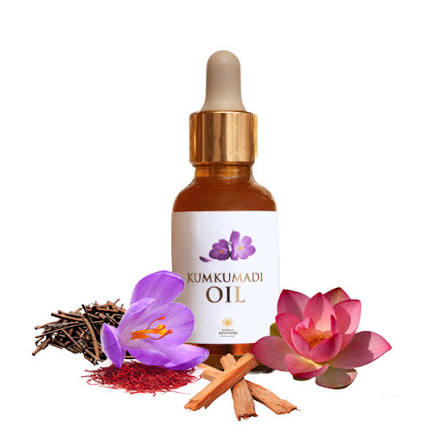
If saffron is the headline ingredient, Kumkumadi Tailam is where the full Ayurvedic ensemble performs together. This centuries-old facial oil layers saffron with sandalwood, manjistha, liquorice and a handful of supporting herbs, each contributing a distinct action rather than a vague “goodness.” Recent instrument-based clinical studies on Kumkumadi Tailam have recorded actual, measurable improvements in pigmentation, redness and skin elasticity — while phytochemical profiling has identified the specific bioactive molecules responsible, moving the formula firmly out of “grandmother’s secret” territory and into replicable, defensible science.
Manjistha: The Quiet Powerhouse Behind the Glow
Less famous than saffron but arguably doing just as much work is manjistha, the deep-red root long used in Ayurveda as a blood purifier and skin brightener. Research has shown manjistha can meaningfully inhibit tyrosinase, the enzyme responsible for excess melanin production — one study recorded pigment-blocking activity in the double digits — while its antioxidant compounds have been found, in comparative lab testing, to rival the free-radical-fighting power of vitamin C at effective concentrations. That’s a striking claim for an ingredient that, until recently, most people only associated with turning bathwater slightly pink.
Why Now?
Part of this comeback is simply timing. Global beauty has spent the last decade chasing “clean,” “natural” and “traditional” labels, and Indian Ayurveda has a long-standing tradition of using botanical ingredients and structured formulations for health and beauty. But the deeper reason is trust. Consumers, especially younger ones, have grown skeptical of unproven natural claims. Saffron, manjistha and Kumkumadi aren’t succeeding because they sound exotic; they’re succeeding because they now come with data attached.
Bringing Ayurveda Into Modern Skincare
This is exactly the gap Blue Nectar was built to close.Make Ayurveda Great Again, means treating these ingredients as more than heritage — treating them as formulations worth proving. That’s the work of our Ayurveda Lab: collecting and cross-referencing the growing body of published research on saffron, manjistha, sandalwood and the rest of the Kumkumadi ensemble, then using those findings to formulate products that don’t just carry the name of tradition, but carry its evidence too.
We’re not reviving these ingredients because they’re trending. We’re making sure that when they trend, they hold up.
The Bigger Picture
The return of saffron, Kumkumadi Tailam and their fellow Ayurvedic ingredients isn’t a beauty industry fad — it’s a correction. These were never dated remedies waiting to be modernized; they were sophisticated formulations waiting for the tools to explain them. As more research validates what Indian households always sensed, the ingredients on your dadi’s shelf and the ones in your skincare routine are, increasingly, becoming the exact same thing — just finally given the credit, and the proof, they were always due.