
Two features that are usually sold separately turn up together on the same machine, and each carries its own ceiling. The inverter stage governs what the output is fit to power. The fuel choice governs how much output there is. A hybrid portable inverter generator runs into one or the other depending on the job, and knowing which saves buying more machine than the work needs.
The two technologies limit different things
The inverter stage on a hybrid generator rebuilds the output electronically, which decouples engine speed from frequency and produces a clean waveform. What it does not do is create capacity, because the engine still sets how many watts exist. Dual fuel changes capacity rather than quality. Run as a propane generator, the machine delivers roughly ten percent less peak output than it does on gasoline through identical hardware, and the waveform is unaffected because the inverter stage is downstream of all of it.
Which ceiling you hit depends on the load
On a job site with hand tools and a compressor, the limit is watts. Motor starting surges dominate, and propane removes a slice of headroom exactly when the surge arrives. Powering sensitive equipment in a home outage, the limit is waveform and the inverter has already solved it. The machine will be loafing at a fraction of capacity, and at that load the fuel choice is about storage rather than output.
Starting watts and running watts on each fuel
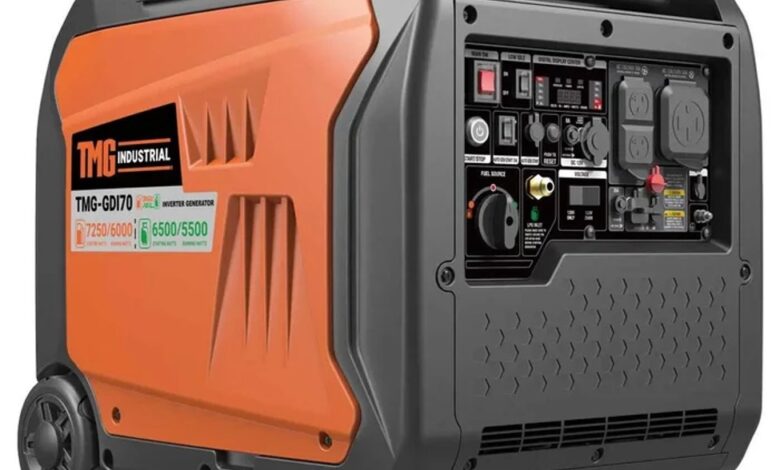
A 7250 watt rating is a starting figure. Continuous output sits lower, and both numbers drop when the machine is run on propane, which means four figures rather than two describe the machine honestly. Reading only the largest of the four is the common mistake. The number that governs a day of work is continuous output on whichever fuel is actually in use, and that is typically the smallest of the set.
Eco mode and what it costs
A hybrid generator can idle its engine down when demand falls, which saves fuel and drops the noise substantially. It also means the engine has to spin up when a load appears, and there is a brief dip while it does.
For lights, chargers and electronics that dip is invisible. For a motor starting under load it can be the difference between starting and stalling, which is why many operators switch eco off when a compressor or a pump is on the circuit.
Fuel choice is mostly a storage decision
Gasoline begins oxidizing within weeks, and the varnish it leaves behind blocks the small passages in a carburetor. Propane has no equivalent shelf life, sits in a cylinder indefinitely, and will start a machine that has not been run since the previous winter without any argument.
Three habits suit a standby machine:
- Run the gasoline system dry before storage
- Keep a full cylinder beside the unit
- Exercise under real load once a month
The last one proves more than the engine does. Running a hybrid generator with no load attached warms it through without ever testing the alternator, the inverter stage or the transfer arrangement, and those are the parts that fail quietly between outages.
What EPA compliance actually describes
An emissions label describes the engine and fuel system meeting a defined standard for hydrocarbons and carbon monoxide. It says nothing about noise, nothing about electrical output, and nothing about indoor use. Carbon monoxide remains the hazard regardless of compliance. A home backup generator belongs outdoors and away from openings in every case, and a low emissions rating changes none of that.
Altitude and heat quietly reduce the output
A naturally aspirated engine loses power as air thins, roughly three percent for every thousand feet of elevation, and it loses more again on a hot day because warm air is less dense. Nothing on the data plate mentions this, because the rating is measured at sea level in moderate conditions.
For a machine at a mountain cabin in summer the two effects together can remove a tenth of the available output before the fuel choice is considered at all. Sizing with some margin is the only practical response, since there is nothing on a modern engine for an owner to adjust.
Adding up the load before buying
Add the running watts of everything that must work at once, then add the single largest starting surge on top rather than averaging it in. Compare that total against continuous output on the fuel you intend to store, not against the headline starting figure.
TMG Industrial builds this one at 7250 watts with inverter output and dual fuel capability. Deciding which of the two features the work actually needs is what tells you whether this machine is right sized or twice the machine required.