From Shopping Habit to Storage Problem: How Fashion Trends Are Changing Our Wardrobes

NZ Wardrobes owner Norm says faster fashion, online shopping and frequent purchases are putting new pressure on the Kiwi wardrobe, and that the fix often starts with how the space inside it is designed.
The way New Zealanders buy clothes has changed dramatically over the past two decades, but the way most of us store them has barely changed at all. According to NZ Wardrobes, that mismatch is creating a new kind of household problem: wardrobes that are full, disorganised and working against the people who use them.
Global research shows how quickly clothing habits have shifted. The Ellen MacArthur Foundation’s report A New Textiles Economy: Redesigning Fashion’s Future found that clothing production roughly doubled in the 15 years leading up to the report, while the average number of times a garment is worn before it stops being used fell by 36% over the same period. In other words, people are buying more and wearing less.
Closer to home, the consequences are showing up at the other end of the cycle. Waste industry body WasteMINZ reports that more than 220,000 tonnes of clothes and textiles are thrown out in New Zealand each year.
A Wardrobe Designed for a Different Era
Norm, owner of NZ Wardrobes, says many of the wardrobes his team is asked to replace were designed for a slower pace of fashion.
“A lot of older wardrobes were built with one long rail, a high shelf and maybe a couple of drawers,” he says. “That made sense when people had a smaller collection that changed with the seasons. Now trends move in weeks, parcels turn up on the doorstep a few days after you click, and there is always another sale around the corner. The wardrobe just was not designed for that kind of turnover.”
He says the most common thing clients tell him is not that they have nowhere to put things, but that they cannot find what they already own.
“People open the doors and everything is crammed in. Things get creased, pushed to the back and forgotten, and then they go out and buy something similar because they did not realise it was already there. The storage problem and the shopping habit end up feeding each other.”
Different Habits, Different Needs
In Norm’s experience, clothing habits vary a great deal from one household to the next, and often between generations under the same roof. Younger clients tend to buy more often, resell or donate more readily and frequently live in rentals or smaller homes where built-in storage is limited. Older clients typically buy less often but keep pieces for much longer, which brings its own challenge of making room for sentimental or occasional items without letting them take over.
“There is no single right answer,” he says. “Someone who lives in knitwear and denim needs drawers and shelves. Someone with a work wardrobe of shirts and suits needs hanging space. A person who shops often needs flexibility, and someone who keeps things for years needs a proper plan for what is in season and what is not. The layout should follow the habits, not the other way around.”
Why Layout Matters More Than Size
That is why Norm believes the answer is rarely just a bigger wardrobe. A larger space with the same fixed layout tends to fill up just as quickly. Instead, he recommends that people look honestly at what they wear, how often they buy and how they get ready each morning before deciding where rails, drawers and shelves should go.
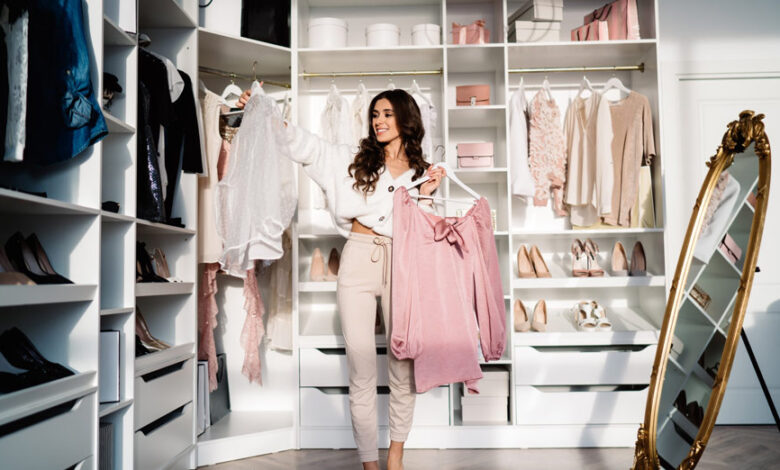
For households trying to keep pace with changing routines, an adaptable fit-out can make a real difference. An NZ wardrobe’s storage solution built around adjustable shelving, divided drawers and a mix of short and long hanging zones allows the interior to change as a person’s lifestyle and shopping patterns evolve, rather than forcing them to work around a design that no longer suits them.
Visibility as a Defence Against Overbuying
Norm also points to visibility as one of the most underrated parts of wardrobe design. Integrated lighting, pull-out trays, shallow drawers and open shelving all help keep a collection in view.
“When you can see everything you own, you wear more of it,” he says. “You also shop more thoughtfully, because you know exactly what is missing and what you already have three of. Good design will not stop anyone loving fashion, but it can help them get far more value out of what is already hanging up.”
A Bigger Conversation About How We Live
For NZ Wardrobes, the issue sits at the meeting point of fashion, consumer behaviour and home design. As clothing becomes cheaper, faster and easier to buy, the wardrobe is no longer just a cupboard. It is a working system that supports daily routines and, ideally, more considered buying.
“We see it as part of a bigger conversation,” says Norm. “If the space is planned around how people actually live, it helps them understand their own habits, make better decisions and hold onto the things they love for longer. That is good for the household, and it is better for what ends up in the landfill too.”
ENDS
About NZ Wardrobes
NZ Wardrobes designs and installs custom wardrobe and storage solutions for homes across New Zealand. The team works with homeowners, builders and renovators to create practical, flexible interiors tailored to the way people live and dress. Learn more at nzwardrobes.co.nz.
Sources
Ellen MacArthur Foundation, A New Textiles Economy: Redesigning Fashion’s Future (2017), as reported by Just Style. WasteMINZ, Tackling New Zealand’s 220,000 tonne textile problem (August 2023).