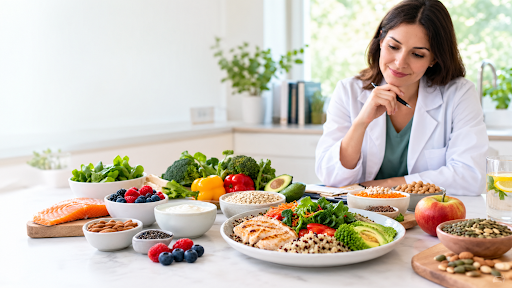

Choosing what to eat for weight loss can make an ordinary food shop feel complicated. Should you avoid bread? Buy protein yoghurt? Replace lunch with a shake?
Published guidance from the British Dietetic Association offers a more practical starting point: balanced meals, manageable portions and changes you can maintain. Its advice includes vegetables, fruit, lean proteins and wholegrain carbohydrates, rather than a short list of special slimming foods.
If you’re researching how to buy Mounjaro online, understanding how everyday food choices fit into your treatment plan is also important.
This guide brings together UK nutrition guidance and everyday meal ideas to help you eat well while working towards a weight that supports your health.
What are the best foods for healthy weight loss?
Useful foods for healthy weight loss include beans, lentils, eggs, fish, lean meat, plain yoghurt, oats, wholegrains, vegetables and whole fruit. These provide combinations of protein, fibre and essential nutrients. Their value depends on how they fit into your overall diet and portion sizes.
There is no single food that guarantees weight loss. A sustained energy deficit, where your body uses more energy than you consume, is part of losing weight. However, appetite, genetics, health conditions, medicines and your environment can all affect how easy that is to achieve.
The following foods offer practical starting points.
Which protein foods can help you feel satisfied?
Including protein in meals can help you feel fuller for longer. Protein also helps maintain muscle, which matters because weight loss can involve losing muscle as well as fat.
Are beans and lentils good for weight loss?
Beans, lentils and chickpeas provide both protein and fibre. They are useful ingredients for meals whether or not you eat meat.
Try using them in familiar dishes:
- Add red lentils to a tomato pasta sauce.
- Mix kidney beans into a vegetable chilli.
- Make chickpea curry with spinach.
- Stir butter beans into a chicken casserole.
For an easy lunch, combine tinned lentils with chopped cucumber, tomatoes, herbs and a little olive oil. Serve with wholemeal bread if you would like a more substantial meal.
How can eggs, fish and lean meat fit into meals?
Eggs, fish and lean meat provide protein. The NHS advises choosing lean cuts and skinless poultry, and eating less processed meat such as bacon and sausages.
Breakfast could be scrambled eggs on toast with tomatoes. At dinner, try grilled chicken with roasted vegetables, or baked fish with peas and potatoes.
If you eat fish, UK guidance recommends at least two portions a week, including one portion of oily fish. Salmon, sardines and mackerel are examples of oily fish, which provide omega-3 fats.
Is plain yoghurt a useful choice?
Dairy yoghurt supplies protein and calcium. Plain varieties can be a useful base for breakfast, a snack or a savoury dressing. NHS guidance favours lower fat, lower sugar dairy options. For dairy alternatives, choose unsweetened products fortified with calcium and other vitamins and minerals.
Try yoghurt with chopped pear and oats, or mix it with cucumber and mint to serve alongside a curry. Compare product labels, as protein, sugar and fat content vary.
Which carbohydrates belong in a weight loss diet?
Bread, rice, pasta and potatoes can all fit into a balanced diet. Choosing higher fibre versions and paying attention to what you serve with them can be more useful than cutting out the entire food group.
Why choose oats and wholegrains?
Oats, wholemeal bread, brown rice and wholewheat pasta help increase fibre intake. The UK recommendation for adults is 30g of fibre a day, from a variety of foods. Fibre also supports digestion and helps prevent constipation.
Simple ways to use these foods include:
- Porridge with milk and sliced apple.
- Wholemeal toast with eggs.
- Brown rice with bean chilli.
- Wholewheat pasta with lentil sauce.
Choose the options you enjoy. A food is only useful in your routine if you are happy to keep eating it.
Can you eat potatoes when trying to lose weight?
Yes. Potatoes are a starchy food, and keeping the skin on adds fibre. Preparation matters: oil, butter and creamy toppings increase the energy content of a meal.
A jacket potato with beans and salad is one possible lunch. Boiled new potatoes can accompany fish or tofu and vegetables. There is no need to treat an ordinary potato as a food you must avoid.
Which fruit and vegetables should you choose?
Variety is more useful than searching for one perfect choice. NHS guidance recommends at least five portions of fruit and vegetables each day. Fresh, frozen and tinned options can all contribute.
How can vegetables make meals more filling?
Most vegetables provide fibre and volume for relatively few calories. NHS weight loss guidance suggests including at least two portions of vegetables with a main meal, roughly half the plate.
Make that practical with foods you already like. Add frozen peas to rice, mushrooms to an omelette or extra carrots to a stew.
A salad does not have to be your default. Roasted cauliflower, steamed green beans and vegetable soup offer different textures and flavours.
Is whole fruit better than juice?
Whole fruit is generally more filling than fruit juice. NHS guidance recommends limiting juice and smoothies to a combined total of 150ml a day.
Keep fruit somewhere convenient. An apple in your work bag or frozen berries ready for breakfast may be more useful than buying fruit that stays untouched at the back of the fridge.
Can nuts and healthy fats fit into a weight loss plan?
Yes. Nuts provide fibre, while unsaturated oils can form part of a balanced diet. However, nuts and oils contain substantial amounts of energy, so portions matter.
Try a small portion of unsalted nuts with fruit, or a little olive oil in a salad dressing. Measuring oil before cooking makes the amount easier to judge than pouring directly from the bottle.
What could a balanced day of eating look like?
Here is an example menu to adapt to your appetite, preferences and circumstances. It is not a prescribed calorie plan.
| Meal | Example |
| Breakfast | Porridge made with milk or fortified soya drink, topped with chopped apple |
| Lunch | Jacket potato with beans and a side salad |
| Dinner | Baked fish or tofu, brown rice and mixed vegetables |
| Optional snack | Plain yoghurt with berries, or fruit with a small portion of nuts |
| Drinks | Water, unsweetened tea or coffee |
For mixed dishes, think about ingredients rather than trying to arrange everything into separate sections. A lentil curry with vegetables and rice can offer the same basic variety as a more traditional plated meal.
How can you make healthier eating affordable?
Start with a few ingredients that work across several meals. For example:
- Use oats for porridge and overnight oats.
- Add tinned beans to soups, salads and stews.
- Keep frozen vegetables available for busy evenings.
- Plan a second meal around leftover cooked ingredients.
- Compare unit prices when choosing between pack sizes.
A simple shopping list could include oats, eggs, lentils, beans, potatoes, plain yoghurt, seasonal fruit and frozen vegetables. Choose quantities you will realistically use.
What if you are researching weight loss injections online?
If you’re looking to buy weight loss injections online, remember that nutrition remains an essential part of treatment. Medicines such as Mounjaro are used alongside a reduced-calorie diet and regular physical activity.
Mounjaro contains tirzepatide and is a prescription-only medicine. A qualified prescriber must assess whether it is suitable for you before prescribing it. Obtain your treatment through a registered pharmacy with a valid prescription.
Does nutrition still matter when your appetite is smaller?
Yes. Eating less does not automatically mean you are getting enough nutrition.
Guy’s and St Thomas’ NHS Foundation Trust advises people taking weight loss medicines to pay attention to protein intake and maintaining muscle. Foods such as eggs, beans, lentils, fish and tofu can help supply protein. Individual targets may need adjusting, particularly for someone with chronic kidney disease.
If treatment makes eating difficult, discuss this with your prescriber or dietitian. Persistent difficulty meeting your nutritional needs deserves attention.
Frequently asked questions
Do you need to stop eating carbohydrates to lose weight?
No. Higher fibre carbohydrates can fit into balanced meals. The portions you eat, the toppings you add and your overall food intake matter more than avoiding bread or rice altogether.
Do you need protein shakes?
Not necessarily. Ordinary foods can provide protein along with other nutrients. A shake may be useful when someone struggles to meet their needs through food, but it is not a requirement for healthy weight loss.
What is a sensible first change?
Choose something specific and manageable, such as preparing lunch twice a week or including vegetables with dinner. The British Dietetic Association recommends starting with a small number of achievable changes and building on them over time.
When should you speak to a dietitian?
Ask for support if you need help adapting food choices to your health, appetite or daily routine. Your GP or healthcare team can advise about referral to a dietitian or a local weight management programme.