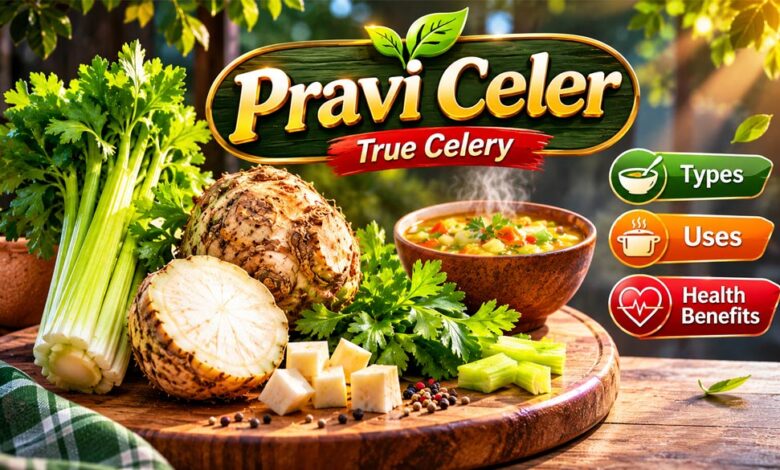

Pravi Celer means “true celery” or “real celery” in South Slavic languages. It refers to celery, a plant known by its scientific name, Apium graveolens. It belongs to the same plant family as carrots and parsley.
Pravi Celer comes in different forms. Some types are grown for their thick green stalks, while others are used for their large roots or flavorful leaves. Each type has its own taste and uses in cooking.
People often search for Pravi Celer to understand what it is, how it differs from ordinary celery, and how it can be used in food. This guide explains its main types, taste, cooking uses, nutritional value, and possible health benefits.
What Is Pravi Celer?
Pravi Celer is a name used for true celery. Its scientific name is Apium graveolens. It is a green plant grown for its stalks, leaves, roots, and seeds.
The word “pravi” means true or real in several South Slavic languages. The name does not describe a completely different plant. Instead, it refers to the familiar celery species and its different cultivated forms.
Celery belongs to the Apiaceae family, which also includes carrots, parsley, fennel, and parsnips. These plants are known for their strong smells and uses in cooking.
In many English-speaking countries, the word celery usually refers to the green stalks sold in shops. However, in Balkan cooking, the root and leaves are also important. They are often used to add flavor to soups, broths, salads, and other home-cooked meals.
Pravi Celer is valued for its smell and taste. Its different parts can be used in different ways. The root adds a deep flavor to cooked dishes, the stalks provide a fresh crunch, and the leaves work as a strong seasoning.
It is important to understand that celery root, stalk celery, and leaf celery are not three separate plant species. They are different forms of the same celery species.
The Three Main Types of Pravi Celer
Pravi Celer has three main cultivated forms. Each one is grown for a different part of the plant.
Celeriac (Celery Root)
<image-placeholder></image-placeholder>
Celeriac is also known as celery root. Its botanical name is commonly written as Apium graveolens var. rapaceum.
Unlike ordinary celery, this type is grown for its large root. It develops a round or uneven base with a rough, brownish outer skin. Inside, the flesh is firm, pale, and has a strong celery smell.
The outside may look unusual, but the inside is useful in many recipes. The rough skin needs to be removed before cooking.
Celeriac is commonly used in soups, vegetable broths, and stews. It can also be roasted, boiled, mashed, or grated into fresh salads.
When cooked, its taste becomes softer and slightly sweet. It also develops a mild nutty flavor, making it suitable for both simple and rich dishes.
Stalk Celery
<image-placeholder></image-placeholder>
Stalk celery is the type most people recognize. It has long, thick, green stalks with a crisp and juicy texture.
It is commonly eaten raw or cooked. People add it to salads, sandwiches, soups, sauces, and vegetable dishes. It can also be eaten as a snack.
Stalk celery has a fresh, grassy taste with a slight bitterness. Its texture makes it useful in dishes that need a little crunch.
Some traditional varieties have a stronger taste than the mild celery commonly sold in supermarkets.
Leaf Celery
<image-placeholder></image-placeholder>
Leaf celery is grown mainly for its leaves and thin stems. It does not develop the large root of celeriac or the thick stalks of ordinary celery.
Its leaves are usually dark green and have a strong smell. They are often used like parsley, but their flavor is more powerful.
A small amount can add plenty of taste to soups, sauces, beans, rice, and vegetable dishes. The leaves can be added near the end of cooking for a fresh flavor or earlier for a softer taste.
Leaf celery is especially useful in traditional cooking because its strong aroma can improve the flavor of simple meals.
All three types belong to the same celery species. The main difference is the part of the plant that growers select and develop for food.
What Does Pravi Celer Taste Like?
Pravi Celer has a fresh, earthy, and slightly bitter taste. However, the flavor changes depending on which part of the plant you eat.
Celery stalks have a light, grassy taste. They are crisp and juicy, which makes them suitable for salads and snacks.
Celeriac has a stronger earthy flavor. When eaten raw, it is firm, slightly sharp, and crunchy. Cooking makes it softer and brings out a mild sweetness.
Celery leaves have a stronger and more concentrated taste. They can also have a slightly peppery flavor. This is why cooks usually add them in small amounts.
Celery seeds have a warm, bitter, and highly aromatic taste. Even a small quantity can add noticeable flavor to food.
Cooking also changes the taste of celery. Roasting and slow cooking soften its sharpness and bring out its natural sweetness. Adding it to soup or broth allows its smell and flavor to spread throughout the dish.
How Is Pravi Celer Used in Cooking?
Pravi Celer is used in many types of food. Its root, stalks, leaves, and seeds can all be used in the kitchen.
It is especially common in soups, broths, salads, stews, and vegetable dishes. Different forms of celery work better in different recipes.
Soups and Broths
Celery is an important ingredient in many traditional Balkan soups and broths.
Cooks often combine it with carrots, onions, parsley root, leek, and parsnips. These vegetables slowly release their flavors while cooking.
Celeriac adds a deep, earthy taste to the broth. Celery stalks provide a lighter flavor, while the leaves add a fresh smell.
Some families remove the cooked root before serving the soup. Others cut it into smaller pieces and serve it with the other vegetables.
Roasted Celeriac
Celeriac can be roasted as a simple side dish.
First, remove its rough outer skin and cut the root into slices or wedges. Add a little cooking oil, salt, and black pepper.
Place the pieces in an oven and cook until they become soft inside and lightly browned outside.
Roasting brings out the natural sweetness of celery root. It can be served with meat, fish, potatoes, or other vegetables.
Fresh Salads
Stalk celery and celeriac can both be used in fresh salads.
Stalk celery is usually sliced into small pieces to add crunch. It works well with lettuce, cucumber, tomatoes, and other fresh vegetables.
Celeriac can be peeled and grated into thin pieces. It is often mixed with apple and lemon juice to create a simple salad.
Adding lemon juice also helps slow down browning after cutting.
Mashed and Cooked Dishes
Celeriac can be boiled until soft and mashed with a little butter, milk, salt, or olive oil.
It can also be cooked with potatoes. Mixing both vegetables creates a smooth side dish with a different taste from ordinary mashed potatoes.
Small pieces of celery can also be added to stews, rice, beans, and sauces. Finely chopped stalks work well with onions at the beginning of cooking.
Using Celery Leaves and Seeds
Celery leaves and seeds are useful for adding flavor without using large amounts of the vegetable.
Fresh leaves can be chopped and added to soups, sauces, and vegetable dishes. They can also be used as a garnish.
Celery seeds are commonly used in pickles, bread, cabbage dishes, and seasoning mixtures. Lightly crushing the seeds before adding them can help release their aroma.
Both leaves and seeds have a strong flavor, so it is better to start with a small amount and add more if needed.
Nutritional Value of Pravi Celer
Pravi Celer is a low-calorie vegetable that contains a good amount of water and several useful nutrients. It can add flavor and texture to meals without adding much fat or sugar.
Celery contains nutrients such as:
- Vitamin K: Helps the body with normal blood clotting and supports bone health.
- Folate: Helps the body make new cells and supports normal growth.
- Potassium: Supports normal muscle function and helps control fluid balance.
- Dietary fibre: Supports digestion and helps keep bowel movements regular.
- Water: Helps the body stay hydrated.
The exact nutritional value depends on the part of the plant. Stalk celery, celery root, leaves, and seeds do not contain the same amounts of nutrients.
Celery root is denser and contains more carbohydrates than ordinary celery stalks. Stalk celery has a high water content and very few calories. Leaves and seeds contain different amounts of nutrients and natural plant compounds.
Adding different parts of Pravi Celer to meals can help increase variety in a balanced diet.
Health Benefits of Pravi Celer
Pravi Celer can be a useful part of a healthy diet. It provides water, fibre, vitamins, minerals, and natural plant compounds.
However, celery should be treated as a food, not a medicine. Eating it regularly can support general nutrition, but it does not cure diseases.
Supports Healthy Digestion
Celery contains dietary fibre, which helps support normal digestion. Fibre adds bulk to stool and helps keep bowel movements regular.
Celery root also provides fibre and can make meals more filling. Adding it to soups, salads, and cooked dishes is a simple way to include more vegetables in your diet.
Helps Support Bone Health
Celery provides vitamin K, a nutrient that plays an important role in normal blood clotting and bone health.
Getting enough vitamin K through a balanced diet helps support normal body functions. However, celery alone cannot meet all your nutritional needs.
Supports Normal Heart Function
Celery contains potassium, which helps the body maintain normal fluid balance and supports healthy muscle function.
Potassium is also important for normal blood pressure control. Including vegetables such as celery in a balanced diet can help provide this nutrient.
Provides Antioxidants
Celery contains natural plant compounds, including flavonoids and other antioxidants.
These compounds help protect cells from damage caused by unstable molecules called free radicals. However, more research is needed to understand the specific health effects of eating celery.
Supports Hydration
Celery has a high water content, especially its green stalks. Eating it can add to your daily water intake.
It is a useful addition to meals and snacks, particularly when combined with other water-rich vegetables and fruits.
How to Choose Fresh Pravi Celer
Choosing fresh celery helps improve the taste and quality of your meals. The best way to select it depends on which type you want to buy.
Choosing Fresh Celery Root
When buying celeriac, choose a root that feels firm and heavy for its size. Its outside may look rough, uneven, or slightly twisted. This is normal.
Avoid roots that feel soft, have wet damaged areas, or show signs of rotting. Small cracks and rough marks do not always mean the vegetable is bad.
A fresh celery root should also have a clean, natural smell.
Choosing Fresh Stalk Celery
Look for stalks that are firm, crisp, and fresh-looking. They should not feel soft or bend easily.
The leaves should be green and free from slimy areas or large dark spots. Avoid bunches with a sour smell or signs of decay.
Darker green stalks may have a stronger taste, while lighter ones can be milder.
Choosing Leaf Celery
Fresh leaf celery should have green leaves and a strong, pleasant celery smell.
Avoid bunches with yellow leaves, black spots, wet stems, or signs of rotting. Fresh leaves are usually more flavorful than old or dried-out ones.
How to Store Pravi Celer
Proper storage helps keep celery fresh and reduces food waste. Different parts of the plant need slightly different care.
Storing Celery Root
Keep unwashed celery root in the refrigerator. Place it in a loose plastic bag or wrap it in a dry cloth.
Store it in the vegetable drawer if possible. Avoid keeping it in a warm or damp place because this can cause it to spoil more quickly.
Storing Celery Stalks
Wrap stalk celery loosely and place it in the refrigerator. Keeping it cold helps maintain its crisp texture.
If the stalks become slightly soft, they may still be suitable for soups and cooked dishes, provided there are no signs of spoilage.
Storing Celery Leaves
Celery leaves are best used while fresh. Wrap them in a slightly damp paper towel and place them in a container in the refrigerator.
You can also chop the leaves and freeze them for later use in soups, sauces, and stews.
Can You Freeze Pravi Celer?
Yes. Different parts of celery can be frozen for later use.
For better quality, blanching is often recommended before freezing vegetables. This means briefly boiling them and then placing them in cold water to stop the cooking process.
After blanching, drain the vegetables, allow them to cool, and pack them into freezer-safe bags or containers.
Frozen celery may lose some of its crispness after thawing. It is therefore more suitable for soups, stews, sauces, and other cooked meals than fresh salads.
How to Grow Pravi Celer
Pravi Celer can be grown in a home garden, but it needs regular care. Celery grows best in fertile soil that holds moisture without becoming waterlogged.
A sunny location with rich soil is generally suitable. The plant needs enough water throughout its growing period to develop healthy stalks, leaves, and roots.
Soil and Growing Conditions
Celery grows well in fertile, moisture-retentive soil. Adding well-rotted compost can improve soil quality and provide nutrients.
The soil should remain evenly moist. Long dry periods can affect the growth and quality of the plant.
Mulching around the plants can help keep moisture in the soil and reduce weed growth.
Planting Celery Seeds
Celery seeds are small and can take time to grow. Many gardeners start them indoors before moving the young plants outside.
Give seedlings enough light and water. Once they become stronger, gradually expose them to outdoor conditions before planting them in the garden.
This process is called hardening off. It helps young plants adjust to changes in temperature and weather.
Watering and Plant Care
Regular watering is important for healthy celery growth. The soil should not be allowed to dry out completely.
Remove damaged or old leaves when needed. Keep the area around the plants free from weeds so they have enough space and nutrients.
Celeriac also needs enough room for its root to develop properly. Avoid crowding the plants.
When to Harvest Pravi Celer
The harvest time depends on the type of celery and local growing conditions.
Stalk celery can be harvested when the stalks are large enough to use. Leaves can be picked as needed, while leaving enough growth for the plant to continue developing.
Celeriac should be harvested when its root has grown to a useful size. It is better to harvest before severe frost damages the plant.
Common Mistakes When Using Pravi Celer
Pravi Celer is easy to use, but a few common mistakes can affect the taste of food and the quality of the vegetable.
Using Too Many Celery Leaves
Celery leaves have a strong flavor. Adding too many can overpower other ingredients.
Start with a small amount and increase it if needed.
Throwing Away Healthy Leaves
Many people use only the stalks or root and throw away the leaves.
Fresh celery leaves can also be used in soups, sauces, beans, rice, and vegetable stocks. Using them helps reduce food waste.
Expecting Celery Root to Taste Like Potatoes
Celeriac can be boiled and mashed like potatoes, but it has its own earthy taste and smell.
It is better to enjoy it as a separate vegetable or mix it with potatoes rather than expect the same flavor.
Letting the Soil Become Too Dry
Celery needs regular moisture while growing. Dry soil can affect plant development and may lead to poor-quality stalks and roots.
Water the plants regularly and use mulch to help keep the soil moist.
Confusing the Different Types of Celery
Celery root, stalk celery, and leaf celery are different cultivated forms of the same species.
They have different shapes, tastes, and cooking uses. Choosing the right type makes it easier to prepare the dish you want.
Is Pravi Celer Safe to Eat?
Pravi Celer is commonly eaten as a vegetable and is safe for most people when properly washed and prepared.
However, some people may have an allergy to celery. Reactions can include itching, swelling, skin problems, or more serious symptoms.
People with a known celery allergy should avoid it and follow medical advice.
Celery also contains natural compounds that may cause reactions in sensitive people. Washing it before use and storing it properly helps reduce food contamination risks.
People taking medicines that require consistent vitamin K intake should also discuss major changes in their diet with their healthcare professional.
Bottom Line
Pravi Celer is the traditional name for true celery, a plant known scientifically as Apium graveolens. It comes in three main forms: celery root, stalk celery, and leaf celery.
Each type has its own taste and uses. The root works well in soups, roasted dishes, and salads. The stalks add crunch, while the leaves and seeds provide strong flavor.
Pravi Celer also contains water, fibre, vitamin K, folate, potassium, and other nutrients. It can be a useful part of a balanced diet.
Almost every part of the plant can be used in cooking. With proper storage and simple preparation, it is an easy vegetable to include in everyday meals.
Frequently Asked Questions
What does Pravi Celer mean?
Pravi Celer means “true celery” or “real celery” in South Slavic languages. It refers to the celery plant.
What is the scientific name of Pravi Celer?
Its scientific name is Apium graveolens. It belongs to the Apiaceae family, which also includes carrots and parsley.
What are the three main types of Pravi Celer?
The three main types are celery root (celeriac), stalk celery, and leaf celery. Each is grown for a different part of the plant.
Is Pravi Celer the same as celery?
Yes. Pravi Celer is another name for true celery. It does not refer to a separate vegetable species.
What is Pravi Celer used for?
It is used in soups, broths, salads, stews, roasted dishes, and sauces. Its leaves and seeds are also used for seasoning.
What are the health benefits of Pravi Celer?
It provides fibre, vitamin K, potassium, folate, and water. These nutrients support normal digestion, bone health, and other body functions.
Can you eat Pravi Celer raw?
Yes. Stalk celery and peeled celery root can be eaten raw. They can be added to salads or eaten as snacks.
How do you store Pravi Celer?
Keep celery root, stalks, and leaves in the refrigerator. Wrap them properly to help maintain freshness.
Can Pravi Celer be frozen?
Yes. Celery can be frozen, especially for later use in soups and cooked dishes. Blanching before freezing can help maintain its quality.
Is Pravi Celer easy to grow?
It can be grown at home, but it needs fertile soil, regular watering, sunlight, and patience. Starting seeds indoors can help with early growth.
Plangud Guide: Timber, Furniture, Flooring, Grilling, and Other Uses