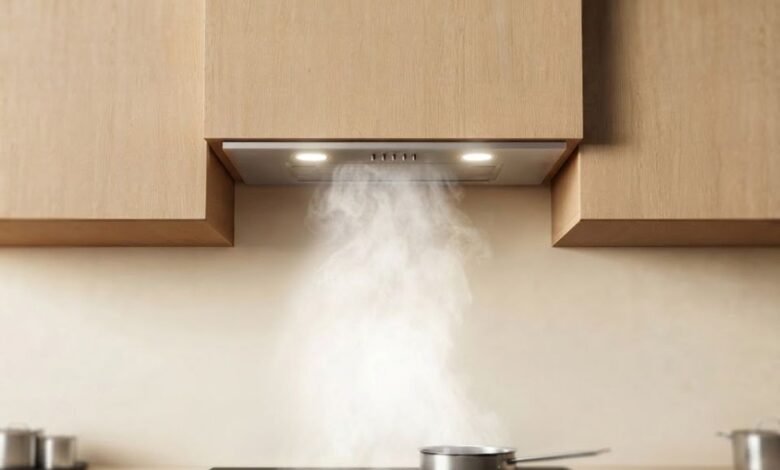

A kitchen range hood can work quietly in the background for years, so replacement is rarely something homeowners plan for. That changes when the motor becomes noisy, airflow weakens, controls stop responding, or a major component fails. At that point, replacing the unit may seem like a straightforward appliance upgrade.
The hidden problem is that an existing hood is rarely just an appliance sitting inside a cabinet. Its dimensions, mounting points, ductwork, electrical access, and surrounding cabinetry may all have been designed around that particular installation. A replacement that looks suitable on paper may not fit the space or connect to the existing setup without modifications. Planning for these details before the old unit fails can make the eventual replacement much easier.
Why Replacing an Insert Can Be Harder Than Installing One
Installing a hood during a kitchen renovation gives you considerably more flexibility. Cabinet dimensions, duct routes, electrical access, and mounting arrangements can all be planned around the appliance. Replacing an existing unit is different because much of that infrastructure is already fixed.
A range hood insert may be installed inside custom cabinetry with an opening that closely matches the original model. The mounting hardware may also be positioned specifically for that unit. Even if a replacement has the same advertised width, differences in depth, height, mounting points, or internal components can prevent it from being a simple swap.
The issue becomes even more complicated when the original model has been discontinued. Instead of looking for an identical replacement, the homeowner may need to find a newer unit that works with an installation designed several years earlier. That is why replacement planning should begin with the existing space rather than with a new appliance.
The Hidden Dimensions That Matter
One of the easiest mistakes is measuring only the visible width of the existing hood. That measurement is useful, but it does not describe the entire installation. A replacement needs to fit within the actual cabinet opening and have enough surrounding clearance for proper installation.
Height and depth can be particularly important. A slightly deeper appliance may interfere with cabinet components, while a different height can leave gaps or require modifications. The position of the blower and other internal components can also affect the available space.
Before choosing a replacement, record the important physical measurements, including:
- Cabinet opening width
- Available height
- Interior depth
- Surrounding clearance
- Mounting locations
- Position of nearby cabinet supports
The goal is to understand the space the appliance occupies, not simply the dimensions printed on the front of the old unit. Manufacturer specifications should then be compared with those measurements before assuming that a replacement will fit.
Why Cabinet Fit Is Often the Biggest Replacement Problem
Cabinetry can turn a relatively simple appliance replacement into a much larger project. An insert is usually integrated into the surrounding structure, which means the cabinet opening becomes part of the installation itself.
Older kitchens may have custom cutouts, support rails, trim pieces, or mounting holes that correspond to a specific model. A newer appliance can therefore be unsuitable even when its advertised width appears almost identical to the original.
Small dimensional differences can have surprisingly large consequences. A replacement may sit too deep, leave insufficient clearance, conflict with a support, or require new mounting arrangements. In some cases, modifying the cabinet may be possible, but that adds work and can change the appearance or structure of the surrounding installation.
This is why checking compatibility before purchasing is more important than relying on a single measurement. The objective is to find a replacement that works with the existing kitchen, not simply one that looks similar to the old appliance.
Don’t Forget the Ductwork and Electrical Setup
Physical dimensions are only one part of the replacement equation. The existing ductwork and electrical arrangement can also determine whether a new hood is genuinely compatible.
Start by documenting the duct diameter and where the duct connects to the current unit. The direction of the connection matters as well. A replacement with a different outlet position may require a new transition or changes to the existing duct route. Additional bends or restrictions can also affect how effectively air moves through the system.
Electrical access deserves the same attention. The location and type of connection should be checked against the installation requirements of the replacement model. Where changes are necessary, they should be assessed appropriately rather than assumed to be a simple DIY adjustment.
A hood that physically fits inside a cabinet is not necessarily a drop-in replacement. It also needs to work with the ventilation and electrical infrastructure surrounding it.
Signs Your Existing Insert May Become Difficult to Replace
You do not necessarily have to wait for complete failure before thinking about replacement. Certain warning signs can indicate that finding a compatible unit may eventually become more difficult.
Look out for:
- A discontinued model number
- Filters that are increasingly difficult to source
- A motor that has become noticeably noisier
- Weakening airflow
- Unreliable controls
- Unusual duct connections
- Highly customized cabinet openings
- Missing installation documentation
- Difficult-to-find replacement components
- Repeated repairs within a short period
None of these signs automatically means replacement is necessary. They do, however, provide a reason to document the existing installation while it is still accessible. Having accurate measurements and model information can make a future decision much less stressful.
What to Measure Before the Old Hood Fails
The best time to document a hood installation is while the existing unit is still working. Once an appliance fails completely, homeowners may be more likely to make a rushed purchase based on availability rather than compatibility.
Begin by measuring the actual cabinet opening rather than relying solely on the old hood’s advertised dimensions. Record the available height and depth as well. These measurements establish the physical limits for a replacement.
The ventilation and mounting details are equally valuable. Record the duct diameter, where the duct connects, and the direction in which it runs. Photographing these areas can be useful when comparing installation specifications later.
Also document the electrical access and mounting arrangement. If the original appliance has brackets, rails, or other hardware, take clear photographs before removing anything.
Keep a record of:
- The manufacturer’s model number
- Cabinet opening measurements
- Duct dimensions and location
- Mounting arrangement
- Filter specifications
- Installation manual, if available
- Clear photographs of the existing setup
This information turns an eventual replacement from a guessing exercise into a compatibility check. It can also help an installer understand the existing arrangement before work begins.
How to Choose a Replacement Without Rebuilding the Kitchen
Once the existing installation has been documented, choosing a replacement becomes more systematic. Start with the space you already have rather than selecting an appliance first and hoping it will fit.
First, compare the cabinet opening with the manufacturer’s required installation dimensions. Then check the mounting method, duct connection, electrical requirements, and available clearance. If any of these differ substantially from the current setup, determine whether modification would actually be practical.
Ventilation performance should also be considered. Airflow ratings such as CFM can be useful, but a higher number is not automatically the best choice for every kitchen. The cooking setup, duct configuration, kitchen layout, and overall ventilation design all matter.
Maintenance deserves attention too. Filters should be accessible, cleaning should be practical, and replacement parts should be reasonably obtainable. The same forward-thinking approach can apply when planning other kitchen appliances, including options such as a Ciarra Nosh Oven, where available space, electrical access, and everyday workflow can influence long-term usability.
Finally, consider the next replacement. Keeping documentation and avoiding unnecessary modifications can make future upgrades considerably easier.
When Repairing Makes More Sense Than Replacing
Replacement is not always the most sensible answer. A relatively recent hood with a single failed component may be worth repairing, particularly when replacement parts remain available and the rest of the system is in good condition.
A motor, switch, light, or other individual component does not necessarily justify replacing an otherwise suitable appliance. Repair can also avoid unnecessary cabinet modifications when the existing installation is well integrated.
Replacement may become more reasonable when the unit has repeated failures, serious corrosion, poor ventilation performance, obsolete controls, or parts that are increasingly difficult to obtain. The condition of the surrounding installation should also be considered.
The best decision is therefore not simply based on the age of the appliance. It depends on repairability, performance, parts availability, installation compatibility, and the likely cost and complexity of keeping the existing system running.
How to Make Future Replacement Easier
A little documentation today can prevent a lot of uncertainty later. Keep the model number and installation manual somewhere accessible instead of relying on being able to find them online years later.
It is also useful to save photographs of the cabinet opening, mounting points, duct connection, and electrical access. Recording filter information and key dimensions provides a useful reference if the appliance is eventually discontinued.
When making kitchen modifications, avoid unnecessary changes that could make future servicing more difficult. Thinking about accessibility and replacement while the kitchen is being installed can help prevent another compatibility problem later.
The goal is not to predict exactly which appliance will be purchased years from now. It is to preserve enough information and flexibility that the next replacement does not become a reconstruction project.
Conclusion
Replacing a kitchen hood can look simple until the new appliance has to work inside an existing cabinet, connect to established ductwork, match available electrical access, and use compatible mounting points. That is why the hardest part of replacement is often not choosing the appliance itself but understanding the installation around it.
The best time to prepare is before the existing unit fails. Measure the cabinet opening, record the duct and mounting arrangement, save the model information, and photograph the installation while everything is accessible. Those small steps can make future replacement decisions much more straightforward.
If you’re planning a broader kitchen appliance upgrade, Ciarra Appliances is another option worth exploring alongside your ventilation and space-planning considerations.
FAQs
These should be placed after the conclusion if the publishing site allows FAQs. They are useful for readers and long-tail coverage, although I would not add them solely to target FAQ rich results.
1. Why can replacing a range hood insert be difficult?
Replacing an insert can be difficult because the new unit must work with the existing cabinet opening, mounting points, ductwork, electrical access, and available clearance. Matching only the width of the old appliance does not guarantee compatibility.
2. What should I measure before replacing a range hood insert?
Measure the cabinet opening width, available height, interior depth, duct diameter and location, mounting arrangement, and electrical access. It is also helpful to record the existing model number and photograph the installation before removing the old unit.
3. Can a new range hood insert fit into an existing cabinet?
It can, but compatibility depends on more than the appliance’s advertised width. The replacement should be checked against the actual cabinet opening, depth, height, mounting requirements, duct connection, and electrical arrangement before purchase.
4. Should I repair or replace an old range hood insert?
Repair may make sense when the unit is relatively recent and has an isolated problem with an accessible replacement part. Replacement can be more practical when the appliance has repeated failures, discontinued parts, serious corrosion, poor performance, or obsolete components.
5. How can I make future range hood replacement easier?
Keep the model number, installation manual, filter information, measurements, and photographs of the existing installation. Documenting the cabinet opening, mounting points, ductwork, and electrical access while the hood is still installed can make a future replacement much easier.