Utah Construction Accidents: Workers’ Comp vs. Personal Injury Claims Explained

One moment, you’re working on a construction site like any other day. The next moment, a fall, equipment failure, or unsafe condition leaves you injured and unsure what happens next.
Now you’re dealing with medical care, missed work, and questions about your options. One question comes up often: Is workers’ compensation my only option after a construction accident?
The answer is not always yes. Workers’ comp may cover your injury, but if another company, contractor, manufacturer, or property owner contributed to the accident, you may have another claim. Here’s what Utah workers should know.
Workers’ Compensation After a Utah Construction Accident
After a construction injury, workers’ compensation is usually the first option for employees injured on the job. Utah workers’ compensation generally provides benefits for covered workplace injuries without requiring the employee to prove that someone was negligent. An experienced construction injury lawyer can help you understand whether workers’ compensation is your only option or if you may file a third-party claim.
Workers’ compensation may cover:
- Medical treatment
- Temporary disability benefits
- Permanent disability benefits
- Partial wage replacement
- Vocational training in some cases
Let’s say a worker falls from scaffolding while completing assigned work. Even if nobody directly caused the fall, workers’ comp may still cover medical care and part of lost wages. But workers’ compensation has limits.
What Workers’ Compensation Does Not Cover
Workers’ comp can help after an injury, but it does not cover every loss. It usually does not include:
- Pain and suffering
- Emotional distress
- Loss of enjoyment of life
- Full future income losses
A serious construction injury can affect your health, work, and daily life. You may need long-term treatment. You may not return to the same job. You may earn less than before.
When Can a Construction Accident Lead to a Personal Injury Claim?
A personal injury claim may apply when another person or company contributed to your injury. Construction sites often involve many companies. So the cause of the accident matters. Unlike workers’ comp, a personal injury claim requires proof. You generally need to show:
- The other party had a duty to act safely
- They failed to do so
- Their actions caused the accident
- You suffered losses because of your injury
Several third parties may potentially be responsible after a construction accident. The main ones are:
Equipment Manufacturers
Construction workers depend on tools and machinery every day. But what happens when that equipment fails?
A defective crane, unsafe tool, faulty safety gear, or broken machine can cause serious injuries. The manufacturer may be responsible if the product had a design problem, manufacturing issue, or missing safety warning.
For example, a worker gets injured after a machine breaks because of a manufacturing defect. Workers’ comp may cover the injury. But the equipment company may also share responsibility.
Contractors and Subcontractors
Many construction projects involve several companies working together. One company’s mistake can put other workers at risk. A contractor or subcontractor may be responsible if they:
- Leave hazards in shared areas
- Ignore safety rules
- Create unsafe electrical or structural conditions
- Fail to warn workers about dangers
Property Owners
Property owners may also share responsibility in some situations. For example, if a property owner knew about a dangerous condition and failed to fix it or warn workers, he will be held liable for that accident.
Common Utah Construction Accidents That May Lead to Claims
Construction accidents happen in many ways. Some involve equipment failures. Others happen because safety rules were ignored.
Falls From Heights
Falls are among the most serious construction injuries. Workers may fall from:
- Scaffolding
- Ladders
- Roofs
- Platforms
The cause of the fall matters. Was safety equipment available? Were proper safety steps followed? Did another company create the danger? These answers can affect who may be responsible.
Equipment Accidents
Heavy machinery can cause serious injuries. Common examples include:
- Forklifts
- Cranes
- Excavators
- Other job site machinery
The problem may come from poor maintenance, unsafe operation, or defective equipment.
Other Construction Hazards
Workers may also face risks from:
- Trench collapses
- Electrical injuries
- Falling objects
- Unsafe job site conditions
OSHA and Utah Occupational Safety and Health (UOSH) create safety rules to reduce these dangers.
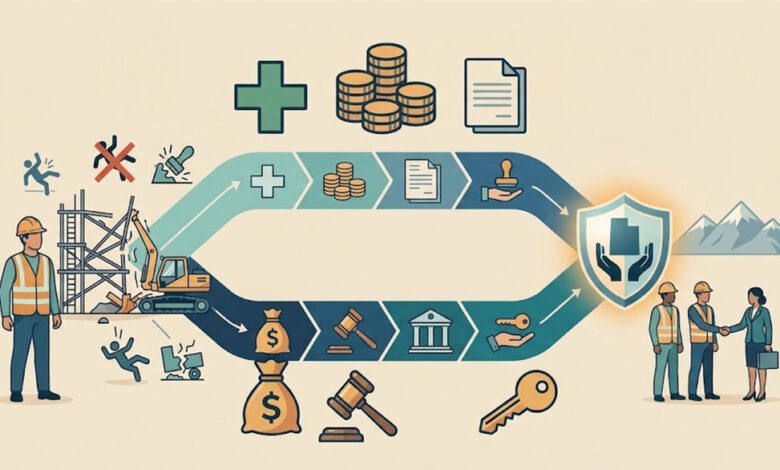
Workers’ Comp vs. Personal Injury Claim: Key Differences
The table below shows the difference between workers’ compensation and a personal injury claim.
| Feature | Workers’ Compensation Claim | Personal Injury Claim |
| Proof of Fault | Usually does not require proving fault. | Requires proving another party caused the accident. |
| Source of Compensation | Comes through employer insurance. | May involve contractors, manufacturers, or property owners. |
| Medical Costs & Income | Covers medical costs and partial wage losses. | May include medical costs and lost income. |
| Pain & Suffering | Usually does not include pain and suffering. | May include pain-related losses. |
Note:
The right path depends on what caused the accident and what evidence is available.
Evidence That Can Help After a Construction Accident
After an accident, important details can disappear quickly. Equipment gets moved. Conditions change. Witnesses forget details. That is why collecting evidence matters. Important records may include:
- Accident reports
- Medical records
- Photos and videos
- Witness statements
- OSHA reports
- Safety training records
- Equipment maintenance records
The sooner you collect this information, the better.
What Should You Do After a Utah Construction Accident?
After an injury, your health comes first. But the steps you take after the accident can affect your claim. Here are some things to do:
- Get medical care quickly
- Report the accident to your employer
- Keep medical records and bills
- Take photos if possible
- Find out if another party contributed to the accident
- Contact an experienced construction accident lawyer.
If you are working in any part of Utah and face an injury, The Law Offices of Roberto Hernandez can help you sort out the case. Attorney Roberto Hernandez has vast experience solving such matters. He can help identify who may be responsible for your construction accident. He can handle investigations, gather evidence, assess your losses, and pursue a third-party claim when another party contributed to your injuries.
Frequently Asked Questions
Can I receive workers’ compensation and file a personal injury claim?
Yes, in some cases. A worker may receive workers’ comp benefits and still file a claim against another person or company that caused the injury.
Can I sue my employer after a construction accident in Utah?
Usually, workers’ compensation limits claims against employers. But contractors, manufacturers, and property owners may still be responsible.
What money can I receive from a construction accident claim?
A personal injury claim may include medical expenses, lost income, future costs, and pain-related losses.
How do I know if someone else caused my construction accident?
Look at what happened before the injury. Unsafe equipment, safety violations, dangerous conditions, or another company’s actions may show that someone else contributed.
Final Thoughts
A construction accident can change your life quickly. Workers’ compensation gives injured workers support after a workplace injury. But sometimes, another person or company also played a part. If a contractor, equipment manufacturer, or property owner contributed to the accident, a separate claim may be possible. Knowing the difference between workers’ comp and personal injury claims can help Utah construction workers understand their options after an accident.