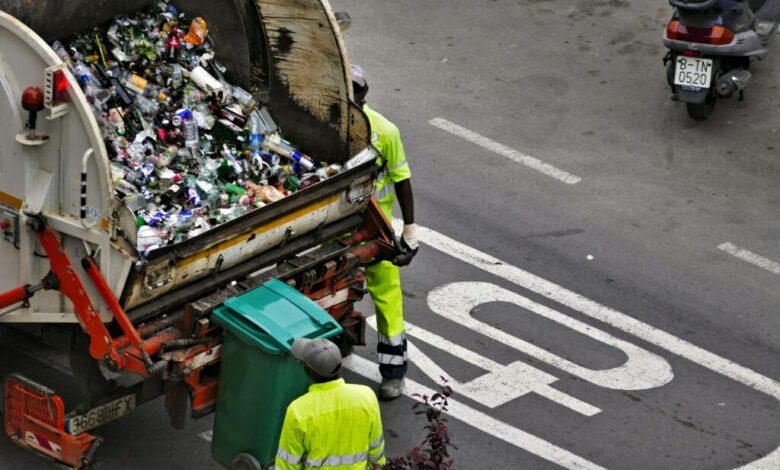

Ask most business owners what waste management actually covers, and the answer’s usually some version of “whoever picks up our bins.” Not wrong, exactly. Just incomplete. That answer barely scratches the surface of what a real waste program can do. For any business generating meaningful volume, understanding the full scope tends to unlock cost savings, compliance benefits, and environmental improvements that a basic pickup contract never comes close to touching. Here’s an honest breakdown of what actually falls under this umbrella, and why each piece earns its place.
Collection Sounds Simple. It Rarely Is.
Regular collection is the most visible part of any waste program, and even this basic function hides more decisions than people assume. Container sizing. Pickup frequency. Route scheduling. All of it directly affects cost, and a business stuck paying for oversized containers or unnecessarily frequent pickups is essentially burning money on service it doesn’t actually need. Getting collection right starts with genuinely understanding a business’s real waste volume, not just defaulting to whatever setup the previous tenant happened to leave behind.
Audits Turn Guesswork Into Actual Numbers
A waste audit is a detailed look at what a business is actually throwing away, sorted by category and volume. Skipped often, since it’s not glamorous work, but genuinely foundational to building anything that works well. Without one, decisions about container sizing, recycling priorities, and diversion opportunities all of it runs on guesswork instead of data. And guesswork tends to leave real savings sitting on the table, unclaimed.
Recycling Recovers Value That Looks Like Trash
Beyond basic disposal, waste management services typically fold in recycling programs built to separate recoverable materials like paper, cardboard, metal, plastic, and glass, from everything else headed for landfill. The specifics shift a lot depending on local infrastructure and what a particular business actually generates, but a well-run program does more than shrink landfill volume. Often cuts overall disposal costs too, since diverted material frequently dodges the landfill fees attached to general waste.
Some businesses assume recycling’s simple. Right stuff, right bin, done. In practice, contamination by non-recyclable material mixed into recyclables is a persistent problem that can quietly sink an entire program if nobody’s watching. Effective setups usually build in some level of staff education or signage just to keep contamination manageable.
Organic Waste Deserves Its Own Category, Not an Afterthought
Food waste, yard waste, other organic material: all of it breaks down differently than general trash, and treating it the same way wastes a real opportunity. Composting programs divert organic material toward processing that avoids the methane production tied to organics rotting in a landfill. For restaurants, grocery stores, and food processors especially, this category can make up a huge share of total waste volume, which makes it one of the more impactful pieces to actually get right.
Hazardous Materials Need an Entirely Different Playbook
Not all waste is equal. Chemicals, batteries, electronics, certain industrial byproducts: these need handling that general waste collection simply isn’t built for. They often carry specific regulatory requirements around storage, transport, and disposal, and getting this wrong isn’t just an environmental problem. It can create real legal and safety liability for a business. Specialized programs exist for these streams precisely because they demand different equipment, different transport, and different disposal or recycling endpoints than everyday trash.
Staying Compliant Means Actually Watching the Rules
Waste regulations vary by jurisdiction and shift more often than most business owners have time to track closely. Mandatory diversion rates. Reporting requirements. Restrictions on certain disposal methods. All of it falls under this umbrella, and staying compliant means someone’s actually monitoring these changes rather than assuming last year’s approach still holds. One of the more underappreciated parts of a comprehensive program since compliance failures tend to surface as fines, or worse, operational disruptions at the worst possible moment.
Reporting Matters More Than Businesses Expect
Increasingly, businesses need documented proof of their waste practices. Internal sustainability reporting, investor requirements, customer due diligence: it all requires the same thing: tracking diversion rates, total volume, and reductions over time in a way that’s actually auditable rather than estimated after the fact. Businesses that build this reporting infrastructure into their program from day one find it a lot easier to respond when a stakeholder eventually asks for the numbers.
Equipment Choices Quietly Shape the Whole Program
The physical side: containers, compactors, balers, and related equipment affects both cost and efficiency in ways that are easy to overlook entirely. The right equipment for a specific volume and waste type can cut pickup frequency, reduce internal labour spent handling waste, and improve how efficiently materials get sorted before collection even happens. Mismatched equipment does the opposite. Quietly costs money month after month, without ever showing up as an obvious line item.
Different Industries Need Genuinely Different Solutions
A manufacturing facility generates a different waste profile than a restaurant does. A restaurant looks nothing like an office building or a retail operation. A program treating every business identically tends to underperform compared to one actually built around a specific industry’s typical waste composition and regulatory obligations.
The Full Picture
Waste management, done right, covers a lot more ground than a weekly pickup schedule. Collection logistics. Recycling and organics diversion. Hazardous material handling. Audits that produce real data. Regulatory compliance. Reporting infrastructure. The right equipment. All of it working together as one system, not scattered pieces. Businesses that understand this full scope tend to get considerably more value out of their waste program than those treating it as one undifferentiated service, and that difference shows up in both cost savings and genuine environmental impact over time.