Why Do HVAC Services Matter When Older Homes Develop Uneven Airflow Between Connected Rooms?

Older homes often develop uneven airflow gradually, making the problem easy to overlook at first. Two connected rooms may share an open doorway yet feel very different because one receives stronger supply air, has a better return pathway, or is served by less restrictive ductwork. Changes made over many years can also alter how the original system performs. Renovated walls, closed-off openings, added insulation, aging ducts, and different room uses may all influence circulation. HVAC services matter because they help identify where air movement is being restricted or redirected. Better distribution can help connected spaces maintain more consistent temperatures without constant thermostat adjustments.
Finding the Source of Uneven Airflow
- Aging Ductwork Can Deliver Different Airflow to Nearby Rooms
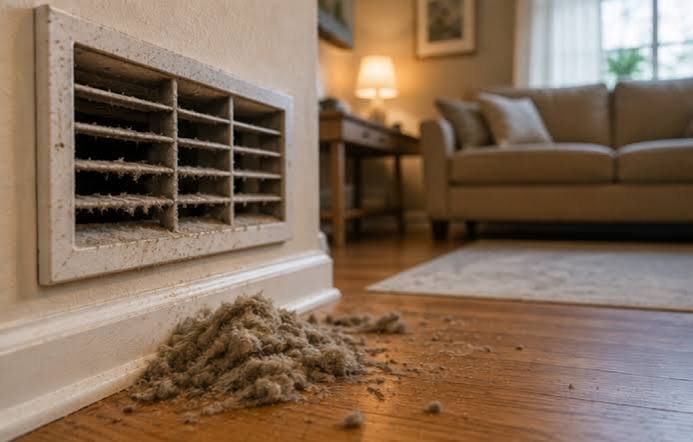
Older duct systems may have been installed when the floor plan and household needs looked very different than they do today. Over time, joints can loosen, insulation can deteriorate, flexible sections can sag, and branch ducts may develop restrictions that reduce the amount of conditioned air reaching certain rooms. Homeowners researching https://atticmanhvac.com/rancho-cordova-hvac/ may notice that two adjoining rooms no longer receive similar airflow even though their doors remain open and both supply registers appear unobstructed. HVAC services can help determine whether the difference begins inside the duct network rather than at the rooms themselves. This matters because simply opening a vent farther or lowering the thermostat will not correct air that escapes or slows before it reaches the register. Evaluating duct condition, branch sizing, accessible connections, and airflow at different points can reveal where performance is being lost. Once you address those issues, nearby rooms can receive a more proportional share of conditioned air and respond more evenly during each heating or cooling cycle.
- Remodels Can Disrupt the Original Air-Distribution Plan
Many older homes have been modified several times without corresponding changes to the heating and cooling system. A doorway may have been widened, a wall removed, a dining room converted to an office, or a former open space divided into smaller rooms. These changes can influence how air moves between connected areas even when the mechanical equipment itself has not changed. A supply register that once served a small enclosed room may now be expected to help condition a larger open area, while a return located in another space may draw air away from the room that needs it most. HVAC services can evaluate the current floor plan instead of assuming the original duct arrangement still matches the way the home functions. This is especially important when connected rooms have different sun exposure, ceiling height, or occupancy. Rebalancing airflow, adjusting register placement, or improving return pathways can help the system reflect the home as it exists today rather than the layout it was designed around decades earlier.
- Return-Air Limitations Can Keep Warm or Cool Air Trapped
Uneven airflow between connected rooms is not always caused by weak supply air. The return side of the system can be just as important because conditioned air must eventually move back toward the equipment to keep circulation going. In older homes, returns may be limited to central hallways or a small number of large grilles that were considered adequate when doors were more often left open. Changes in furniture placement, remodeling, or household routines can reduce how effectively air moves toward those returns. One connected room may receive conditioned air easily while another develops pressure that slows additional supply flow. HVAC services can evaluate whether return pathways are adequate and whether air has a clear route out of each space. Improving that circulation can reduce stagnant areas and help adjoining rooms interact more evenly. This matters because adding more supply air without addressing return movement can create pressure differences rather than solving the underlying distribution problem.
- Duct Balancing Can Help Correct Long-Standing Room Differences
Some older homes have always had one room that feels warmer in summer or cooler in winter, and homeowners may begin to treat the imbalance as a permanent characteristic of the property. In reality, the issue may involve how much air each branch duct receives. Dampers may be poorly adjusted, one branch may be more restrictive than another, or nearby rooms may be competing for airflow from the same trunk. HVAC services can compare airflow across connected rooms and determine whether balancing adjustments could improve distribution. The goal is not to send identical airflow everywhere, because different rooms have different heating and cooling loads. Instead, airflow should match each space’s needs. Better balancing can reduce the amount of conditioned air being overdelivered to one room while another struggles. This approach helps connected areas feel more consistent without forcing homeowners to partially close vents or use portable fans to correct a problem that starts deeper inside the duct network.
Restoring More Consistent Airflow Across Older Floor Plans
HVAC services matter when older homes develop uneven airflow between connected rooms because the problem often involves more than one visible vent. Aging ducts, remodeling changes, limited returns, poor balancing, and newer equipment can all influence how air moves through the property. A thorough evaluation helps identify where circulation is being lost, restricted, or redirected before homeowners continue compensating with thermostat changes or portable equipment. When supply and return pathways are improved and airflow is better balanced, adjoining rooms can respond more evenly during heating and cooling cycles. That creates a more comfortable home while helping the existing HVAC system distribute conditioned air in a way that better matches the current floor plan.