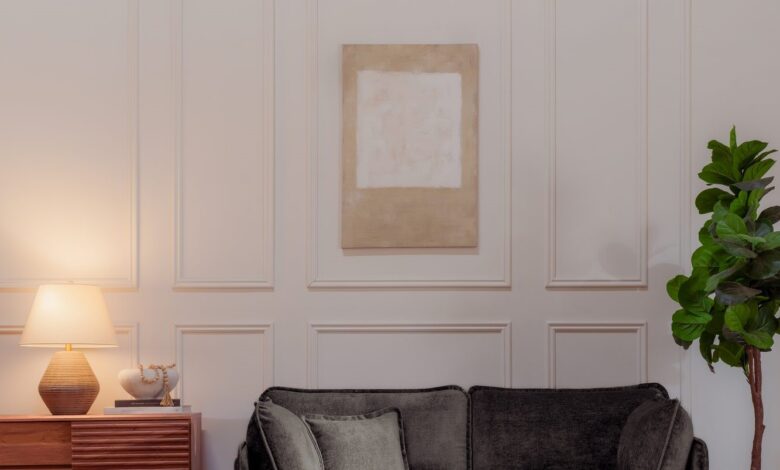

Covers that come off the cushions and the frame turn everyday upholstery care into a clear set of steps
Most sofas leave owners with two options when something spills: blot it or spot treat it. Machine-washable upholstery adds a third. With removable covers, the fabric can be taken off and laundered following the manufacturer’s instructions. Anabei carries this feature across the frame as well as the cushions, so washability belongs to the entire seating system.
The reason that matters is simple: spills ignore cushion borders. A drink can run onto an arm or down the front of the frame. A pet can track dirt along the back or the sides. Food ends up wherever people gather, especially in a family room where the sofa is in use all day.
Being able to remove every cover gives a household a clear response to those everyday moments. It also ties into Anabei’s modular construction, which lets seating be configured, rearranged, scaled down, or added to as the space and the household change.
Washing More Than the Cushions
A typical upholstery-care routine starts with vacuuming, blotting, and spot cleaning. Those steps still help, but when upholstery is fixed, only so much fabric can come off for a deeper clean.
Anabei works around that limit with removable, machine-washable covers on both the cushions and the frame. The exact reach of those covers is the key point: full removability carries washability onto the upholstered structure itself, instead of ending at the loose cushions.
The first defense comes from the brand’s performance fabrics. Anabei says they resist stains and liquids, are PFC/PFAS-free, and are OEKO-TEX certified, with pet-friendly and snag-resistant options also offered. Once a wash is needed, the removable covers take over as the next stage of care.
Put together, those features give washability a specific job. Stain and liquid resistance handle the first contact, and removable covers let the affected fabric be cleaned according to its care instructions. Each feature covers a different moment in the same mishap.
Extra slipcovers are sold separately, so a household can keep a spare set on hand for laundry days or use one to change the furniture’s look. Since covers can be swapped on their own, new fabric doesn’t mean replacing the whole seating system.
A Care Routine That Survives Rearranging
Cleaning isn’t the only reason furniture needs change. A move can bring a differently shaped room. A growing household may want more seats. A smaller space might need fewer pieces or a new arrangement.
Anabei’s modular build lets the layout keep up. Pieces can be arranged for different rooms and seats added or removed, so the sofa isn’t tied to one room, orientation, or stage of household life.
Washable covers back up that flexibility with a care routine that repeats however the configuration shifts. A module moved to a new spot stays part of the same removable-cover system, so the arrangement can change while fabric care stays the same.
Replaceable components add to the sofa’s long-term usefulness. If one piece eventually needs replacing, the modular design lets that part be handled on its own, without automatically replacing the whole sofa. The system is built from individual parts rather than one fixed upholstered unit.
The frame is part of that approach. Anabei uses steel in place of a conventional wood frame, and the raw materials in its products are recyclable. Components ship in manageable boxes sized for parcel delivery, which suits the brand’s direct-to-consumer model.
Picking a Seat Feel Without Changing the Care
Choosing a sofa involves more than cleaning and layout. Anabei offers two seat inserts, so the way the seat feels is a separate choice from the fabric and the configuration.
The Deluxe+ Blend is made with high-resilience foam for a softer, sink-in feel. The Memorix+ Blend uses contoured high-resilience memory foam to balance support and comfort. The foam carries CertiPUR-US certification.
Both inserts sit inside the same covered seating system. Picking Deluxe+ or Memorix+ changes how the seat feels, not how the removable covers are cared for. That lets fabric, layout, and comfort be treated as three separate decisions within one modular design.
Rather than leaving cleaning as an after-the-spill worry, Anabei builds it into the original buying decision. Choosing a configuration, fabric, and seat insert also means choosing a sofa whose upholstered exterior can come off to be washed.
That point gives Anabei furniture reviews more useful context. A comment on comfort means more when it names the seat insert being judged. Likewise, a description of cleaning is more helpful when it says which covers came off and whether the care instructions were followed.
From First Drop to Fresh Cover
How to handle a spill first depends on the fabric and the product’s care instructions. Anabei’s performance fabrics, which resist stains and liquids, offer the first layer of protection. If the upholstery then needs washing, the covers can be taken off both the cushions and the frame.
That step is what separates washable upholstery from furniture that depends mostly on surface cleaning. The spill may still need handling, but the sofa was built with a defined way to maintain it.
The same practical approach runs through the rest of the seating system. Modules can be moved when a room changes. Seat inserts can be matched to comfort preferences. Slipcovers can be washed, replaced, or swapped to give the sofa a fresh look.
A spill lasts a moment, while keeping up a sofa goes on for as long as it is owned. By extending machine washability over the cushions and the frame, Anabei makes that upkeep part of the design from the start instead of something tacked on later.