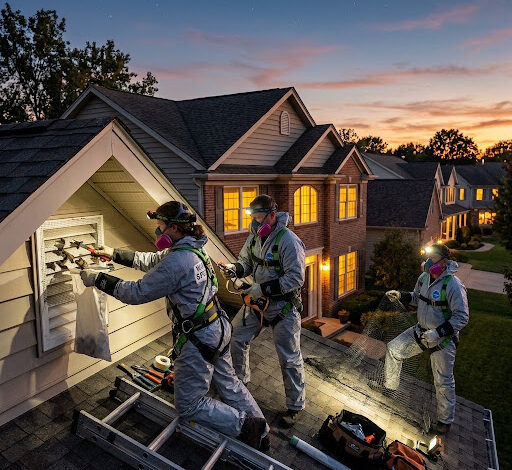

Discovering bats in your home rarely happens under good circumstances. Maybe you heard scratching in the walls at dusk, spotted droppings near your attic vents, or watched a small, winged shadow dart out from beneath your roofline as the sun went down. Whatever led you here, one thing is certain: bats and homeowners rarely make good roommates.
Bats are fascinating creatures. They pollinate plants, control insect populations, and play a genuinely important role in local ecosystems. But when they choose your attic, soffits, or chimney as their roosting spot, that ecological value quickly takes a back seat to some very real concerns for your health, safety, and home.
This post breaks down why bat colonies are more than just a nuisance, what risks they pose if left unaddressed, and how a professional approach makes all the difference in resolving the problem safely and permanently.
Why Do Bats Choose Homes as Roosting Sites?
Bats are drawn to warm, dark, and undisturbed spaces, which makes attics, wall voids, and chimneys ideal substitutes for the caves and hollow trees they’d naturally roost in. A single gap as small as three-eighths of an inch is enough for a bat to squeeze through, so even well-maintained homes aren’t immune.
Once inside, bats tend to return to the same roosting site year after year. A small colony can quickly grow into dozens of bats as maternity season brings new pups into the mix. This is one of the biggest reasons early detection matters. The longer a colony stays, the larger and more established it becomes.
What Are the Risks of Having Bats in Your Home?
Health Concerns Linked to Bat Droppings
Bat guano isn’t just unpleasant to clean up. It can harbor a fungus that, when disturbed, releases spores linked to histoplasmosis, a respiratory illness that affects the lungs. This risk grows the longer droppings accumulate in an enclosed attic space with poor ventilation.
Structural Damage Over Time
Guano and urine buildup can seep into insulation, wood framing, and drywall, leading to stains, odors, and in some cases, structural weakening. What starts as a minor issue can turn into a costly repair project if bats are allowed to roost undisturbed for months or years.
Rabies and Other Disease Risks
While the percentage of bats carrying rabies is relatively small, any direct contact with a bat should be treated seriously. Bats have small, sharp teeth, and bites aren’t always immediately noticeable, especially during sleep. This is why homeowners are advised never to handle a bat directly, even if it appears to be injured or docile.
How Can You Tell If You Have a Bat Problem?
Bats are nocturnal and secretive, so signs of their presence are often more noticeable than the bats themselves. Common indicators include:
- Scratching or rustling sounds in walls or ceilings, especially around dusk and dawn
- A strong, musty odor resembling ammonia, often coming from attic spaces
- Dark staining around small entry points on the exterior of the home
- Guano accumulation near roosting sites, resembling small dark pellets
- Bats seen flying in and out of the same location at dusk
If you’ve noticed even one or two of these signs, it’s worth a closer look before the situation grows.
Why DIY Bat Removal Isn’t the Safe Choice
It’s tempting to search for a quick fix, especially if the problem seems minor. But bats are protected under many state and federal wildlife laws, meaning removal methods are heavily regulated. Sealing entry points incorrectly, or at the wrong time of year, can trap bats inside your home or separate flightless pups from their mothers, creating an even bigger problem.
There’s also the exposure risk to consider. Without the right protective equipment and training, cleaning up guano or handling a live colony puts homeowners directly in contact with the very health hazards mentioned earlier.
What Does Professional Bat Removal Involve?
A proper bat removal process is methodical, humane, and designed to prevent the colony from returning. It typically includes:
- Inspection: Identifying every entry point, roosting location, and colony size across the property.
- Exclusion: Installing one-way devices that allow bats to leave but not re-enter, timed carefully to avoid trapping pups.
- Sealing: Closing off all identified gaps and potential entry points once the colony has fully vacated.
- Cleanup and sanitation: Removing guano safely and treating affected areas to eliminate odor and health hazards.
- Prevention: Recommending long-term measures to keep bats from returning to the same location.
Each step matters. Skipping exclusion in favor of simply sealing entry points, for example, risks trapping bats inside walls or attics, leading to a far worse situation than the one you started with.
Why Choose Palm Beach Wildlife Services for a Bat Problem?
Bat Removal that provides long-term relief from a bat colony begins with a process built around your home’s specific situation, not a one-size-fits-all fix. At Palm Beach Wildlife Services, every case starts with a thorough inspection to understand exactly how bats are accessing the property and where they’ve made themselves at home. From there, our team designs an exclusion and sealing strategy that removes the colony humanely while protecting the structure of your home.
We understand that a bat problem can feel overwhelming, especially once you start thinking about health risks and property damage. That’s exactly why our process is built around clear communication, proven techniques, and a genuine respect for both the homeowner and the wildlife involved. Our technicians handle everything from initial inspection to guano cleanup, so you’re not left managing any part of the process alone.
If you’re dealing with signs of bats in your attic, walls, or chimney, waiting rarely makes the problem smaller. Reach out to Palm Beach Wildlife Services for an inspection, and let our team guide you toward a home that’s bat-free for good.
Frequently Asked Questions
How long does bat removal typically take?
Most bat exclusions take one to two weeks, as this allows enough time for the entire colony to leave the roosting site naturally through the installed exclusion devices before entry points are sealed.
Is it illegal to remove bats on your own?
In many states, certain bat species are protected, and removal during maternity season is restricted or prohibited. Professional removal services understand these regulations and time their work accordingly.
Will sealing my home guarantee bats won’t return?
Sealing every identified entry point significantly reduces the chance of bats returning, though ongoing maintenance and periodic inspections help ensure new gaps don’t develop over time.
What time of year is best for bat removal?
Bat removal is generally most effective in early spring or fall, outside of maternity season, when colonies are more mobile and less likely to have dependent pups present.