Important Factors to Consider When Selecting a Striping Company for Your Pavement Marking Needs

Well-maintained pavement markings are an important part of creating an organized, functional, and visually appealing property. Parking spaces, traffic lanes, pedestrian crossings, loading zones, directional arrows, and restricted areas all depend on clear markings to communicate information effectively. Over time, these markings can fade because of vehicle traffic, weather exposure, sunlight, cleaning, and normal pavement wear. When lines become difficult to see, parking areas can become less organized and drivers may have trouble understanding traffic patterns. Selecting the right striping company can help property owners maintain clear and durable pavement markings while improving the overall appearance and usability of their paved areas.
Understand Your Pavement Marking Requirements
Before contacting a contractor, property owners should identify exactly what type of pavement marking work is required. Some projects may involve simple parking space re-striping, while others may require a complete redesign of the pavement layout. Additional markings can include directional arrows, pedestrian crossings, fire lanes, loading zones, accessible parking spaces, curbs, symbols, and other traffic-control markings. Understanding the project’s requirements makes it easier to communicate expectations and compare potential service providers. A professional striping company should be able to review the property, discuss its current layout, and recommend practical solutions based on how the paved area is used.
Consider Experience and Expertise
Experience is one of the most important factors when selecting a pavement marking contractor. Experienced professionals are familiar with different pavement surfaces, marking materials, application techniques, layout challenges, and maintenance requirements. They can often identify potential problems before work begins and suggest solutions that improve the final result. Experience is particularly important for large commercial parking areas or projects involving complicated traffic patterns because accurate measurements and consistent markings are essential. When evaluating a striping company, property owners should ask about previous projects, the types of properties they have worked on, and whether they have experience with pavement marking requirements similar to their own.
Evaluate the Quality of Materials
The quality of the materials used for pavement markings can have a direct effect on their appearance, durability, and lifespan. Different surfaces and applications may require different types of traffic paint or specialized marking products. Factors such as traffic volume, surface condition, weather exposure, and expected maintenance schedules should be considered when selecting materials. Low-quality products may fade or wear more quickly, potentially requiring frequent re-striping and increasing long-term maintenance costs. A reputable striping company should be able to explain which materials they recommend and why those products are appropriate for the specific pavement and expected usage.
Examine the Surface Before Striping
Pavement conditions should be evaluated before any new markings are applied. Cracks, potholes, loose asphalt, damaged concrete, oil contamination, dirt, and other surface problems can affect the quality and durability of new striping. Applying paint over a poorly prepared surface may result in uneven lines, poor adhesion, and premature fading. In some cases, pavement repairs or cleaning should be completed before striping begins. A professional contractor should recognize these conditions and explain whether they need to be addressed first. Working with an experienced striping company can help ensure that surface preparation receives the attention it deserves rather than treating painting as the only important part of the project.
Review the Proposed Layout
A pavement marking project should do more than simply refresh faded lines if the existing layout is inefficient or outdated. Property owners should consider whether the current arrangement provides enough room for vehicles to maneuver, whether parking spaces are appropriately organized, and whether pedestrian routes are clearly identified. Changes in property use may mean that the original layout no longer meets current needs. A new design can sometimes improve traffic flow and make better use of available pavement. Before approving a project, ask the striping company to review the proposed layout and explain how the markings will affect parking, vehicle movement, pedestrian access, and overall property organization.
Check Attention to Detail
Professional pavement striping requires accuracy and consistency. Parking spaces should be properly aligned, lines should be straight, and symbols should be positioned consistently. Poor measurements or rushed application can result in uneven spaces, inconsistent widths, overspray, or markings that do not align with the property’s existing design. These problems can affect both functionality and appearance. Attention to detail becomes especially important when a project includes a large number of individual parking spaces or multiple types of pavement markings. A reliable striping company should demonstrate a commitment to accurate measurements, clean application, and consistent results throughout the entire project.
Ask About Equipment and Application Methods
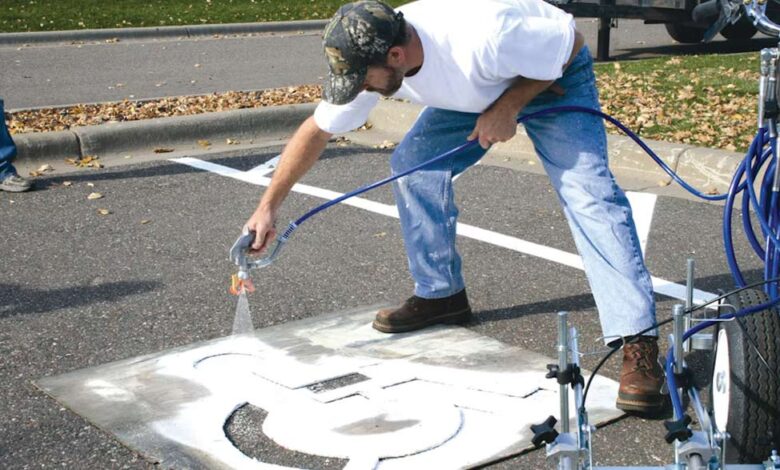
The equipment used during a striping project can influence the quality and efficiency of the finished work. Professional striping equipment is designed to produce consistent line widths and clean edges while allowing contractors to complete larger projects efficiently. Depending on the scope of the work, contractors may use specialized machines for parking lot lines, symbols, curbs, stencils, and other markings. Proper equipment should also be maintained and operated by trained personnel. When comparing contractors, property owners can ask what equipment and application methods will be used. A professional striping company should be able to explain its approach and describe how the selected equipment is suited to the project’s requirements.
Consider Weather and Surface Conditions
Weather can have a major impact on the success of pavement marking work. Paint generally requires appropriate surface conditions to adhere and cure properly. Rain, moisture, extreme temperatures, or unsuitable pavement conditions can affect drying times and the overall quality of the finished markings. A contractor should evaluate weather conditions and avoid applying materials when conditions are unsuitable for the selected product. Scheduling may need to remain flexible when unexpected weather occurs. A responsible striping company understands that rushing a project under poor conditions can compromise the results and may be willing to adjust the schedule when necessary to protect the quality of the work.
Compare Detailed Estimates
Price is an important factor, but it should not be the only consideration when selecting a pavement marking contractor. Estimates should be reviewed carefully to determine exactly what is included in the proposed price. The estimate may cover surface preparation, materials, labor, layout design, application, cleanup, and other services, but not every contractor structures estimates in the same way. A significantly lower quote may exclude important services or use different materials. Property owners should request detailed estimates and compare them based on the overall scope of work rather than focusing solely on the final number. A trustworthy striping company should provide clear information about the work being proposed and any circumstances that could result in additional costs.
Assess Communication and Customer Service
Good communication can make a pavement marking project much easier to manage. From the initial consultation through project completion, the contractor should provide clear information about the scope of work, scheduling, preparation requirements, materials, and expected results. Questions should be answered in a straightforward manner, and any changes to the project should be discussed before additional work is performed. Poor communication can lead to misunderstandings about layouts, schedules, or pricing. Property owners should therefore consider how responsive and professional a contractor is during the initial consultation. The way a striping company communicates before the project begins can provide useful insight into how the company may handle the project itself.
Verify Safety and Compliance Practices
Pavement markings can have important safety and accessibility functions, so projects should be planned with applicable requirements in mind. Certain areas may require specific dimensions, symbols, colors, or placement depending on the property’s purpose and the regulations that apply to the project. Accessible parking spaces, pedestrian crossings, emergency access areas, and fire lanes may have particular requirements that should be considered. Property owners should discuss these areas with their contractor rather than assuming that standard markings will automatically meet every requirement. A knowledgeable striping company can assist with the physical application of the markings while helping property owners understand which project details may require additional review.
Think About Long-Term Maintenance
Even high-quality pavement markings eventually experience wear. Heavy traffic, weather exposure, sunlight, cleaning activities, and pavement deterioration can gradually reduce their visibility. Property owners should therefore think about maintenance when planning an initial striping project. Regular inspections can identify fading or damaged areas before the markings become difficult to recognize. Some properties may need re-striping more frequently than others because of traffic levels or environmental conditions. Establishing a practical maintenance routine can preserve the appearance and usefulness of the pavement layout. Discussing maintenance expectations with a striping company can also help property owners understand when markings may need to be refreshed and what factors influence their lifespan.
Look at Previous Work
Reviewing examples of previous projects can help property owners understand the quality and consistency a contractor can provide. Photos of completed work may show how accurately parking spaces were aligned, how clean the lines appear, and how effectively different pavement markings were incorporated into a property. References or reviews may also provide information about communication, scheduling, reliability, and overall customer experience. When evaluating previous work, property owners should look for projects that are similar in size and complexity to their own rather than relying solely on general promotional materials. A striping company with relevant experience should be able to demonstrate the type of work it regularly performs.
Prepare the Property Before Work Begins
Property owners can help make the striping process more efficient by preparing the work area before the contractor arrives. Vehicles should generally be removed from the areas being painted, and unnecessary equipment or debris should be cleared from the pavement. If the project involves a commercial or shared property, occupants, employees, customers, or tenants may need advance notice about temporary access restrictions. Any known pavement defects should also be communicated to the contractor. Proper preparation reduces interruptions and allows the striping crew to work efficiently. Clear communication between the property owner and the striping company can help prevent avoidable delays and ensure that everyone understands what needs to happen before the project begins.
Think About Future Property Changes
A pavement layout that works well today may not be ideal several years from now. Properties can change as businesses expand, parking requirements increase, building uses change, or new facilities are added. When planning a striping project, property owners may want to consider whether future changes could affect the current layout. Designing a flexible arrangement may reduce the need for major revisions later. It can also be useful to discuss potential future expansion with the contractor before finalizing the design. A knowledgeable pavement marking professional can identify layout considerations that may make future changes easier while still meeting current requirements.
Conclusion
Selecting the right pavement marking contractor involves more than comparing prices or choosing the first available service provider. Property owners should consider experience, materials, equipment, surface preparation, layout planning, attention to detail, safety requirements, communication, and long-term maintenance. A carefully planned project can improve the organization, visibility, functionality, and appearance of paved areas while helping important markings remain easy to understand. Before making a final decision, property owners should review estimates, examine previous work, discuss project requirements, and make sure the contractor understands the intended use of the property. By taking these factors into account, property owners can approach pavement marking projects with greater confidence and establish a maintenance strategy that keeps their pavement markings clear, consistent, and useful over time.