How to Choose the Right Entertainment Centers for a Stylish and Functional Home

Creating a comfortable and organized entertainment area can make a significant difference in how a living space is used and enjoyed. Modern homes often include televisions, gaming systems, speakers, streaming devices, media players, decorative items, books, and other accessories that need a practical place to be stored. Entertainment centers can bring these elements together while helping create a clean and coordinated appearance. A well-designed unit can provide storage, display space, cable management, and a suitable position for electronic equipment without making the room feel unnecessarily crowded. Choosing the right design requires consideration of the room’s size, available wall space, storage requirements, furniture style, and the type of technology being used. With thoughtful planning, an entertainment area can become both attractive and highly functional.
Understanding the Purpose of an Entertainment Area
An entertainment area is more than simply a place to position a television. It can serve as the central point of a living room, family room, media room, or other shared space where people gather to relax. Entertainment centers can help organize the various devices and accessories that are commonly used for watching movies, playing games, listening to music, or accessing digital content. Shelving can provide space for books, decorative objects, gaming accessories, and media collections, while cabinets can keep less attractive items hidden from view. A thoughtfully designed setup can also reduce clutter by giving frequently used items a designated location. Before selecting a unit, homeowners should consider how the space is actually used and what items need to be accommodated.
Choosing the Right Size
Size is one of the most important factors when selecting furniture for an entertainment area. A unit that is too small may not provide enough storage or sufficient support for the television and related equipment, while an oversized piece can make the room feel cramped. Entertainment centers should be proportionate to the wall, television, seating arrangement, and overall dimensions of the room. Homeowners should measure the available wall space carefully before purchasing or ordering furniture. It is also important to consider ceiling height, nearby windows, doors, electrical outlets, and other architectural features. Taking accurate measurements can help prevent installation problems and ensure that the finished arrangement feels balanced rather than overwhelming.
Considering Television Placement
The television is usually the primary feature of an entertainment arrangement, so its position should be considered before selecting furniture. The screen should be placed at a comfortable viewing height and positioned so that it can be seen clearly from the main seating areas. Entertainment centers can provide a stable base for certain television sizes or create a framed appearance when the screen is mounted above or within the unit. Homeowners should check the manufacturer’s recommendations for television mounting and furniture compatibility when necessary. The distance between the television and seating should also be considered because an appropriate viewing position can improve comfort during extended use. Planning television placement first makes it easier to determine the ideal size and configuration of the surrounding furniture.
Storage Options and Organization
Modern entertainment spaces often contain more equipment and accessories than people initially expect. Streaming devices, game consoles, controllers, remotes, headphones, speakers, cables, chargers, books, and decorative objects can quickly create clutter if they do not have designated storage. Entertainment centers with a combination of open shelves, drawers, and enclosed cabinets can provide flexible organization for different types of items. Open shelves are useful for displaying decorative pieces or keeping frequently used equipment accessible, while closed storage can hide cables, accessories, and less attractive items. Adjustable shelving can provide additional flexibility when equipment changes over time. Choosing a unit with appropriate storage capacity can help keep the room organized and make everyday use more convenient.
Cable Management and Technology
Cable management has become increasingly important as entertainment systems have become more technologically advanced. Multiple devices can require power cords, HDMI cables, audio connections, network cables, and other accessories. Entertainment centers designed with cable-management openings can help route wires behind furniture and reduce visible clutter. Proper cable organization can also make it easier to identify and replace connections when equipment is upgraded or moved. Homeowners should consider the number of devices they currently use as well as potential future additions. Adequate ventilation around electronic equipment is also important because devices can generate heat during operation. A well-planned media unit should therefore provide both cable organization and sufficient airflow around components.
Selecting the Right Style
Furniture style has a major influence on the overall appearance of a room. Entertainment centers are available in traditional, modern, contemporary, rustic, minimalist, industrial, and transitional designs, among many other options. Homeowners should consider the existing furniture, flooring, wall colors, lighting, and decorative elements when selecting a style. A unit that complements the surrounding decor can create a cohesive appearance rather than looking like an isolated piece of furniture. Material choices such as wood, engineered panels, metal, glass, or combinations of these materials can also influence the character of the space. Selecting a style that reflects personal preferences while remaining compatible with the existing room can create a more comfortable and visually balanced environment.
Choosing Suitable Materials
The material used to construct furniture affects its appearance, durability, maintenance requirements, and overall cost. Solid wood can provide a natural appearance and substantial construction, while engineered wood products can offer flexibility in design and finish. Metal components may be incorporated into modern or industrial designs, while glass shelves can create a lighter visual appearance. Entertainment centers should be selected based on the weight of the television and equipment they are expected to support. Homeowners should also consider how frequently the furniture will be used and whether it will be exposed to children, pets, or other sources of wear. Choosing durable materials and quality hardware can help the furniture remain functional and attractive for many years.
Built-In and Freestanding Designs
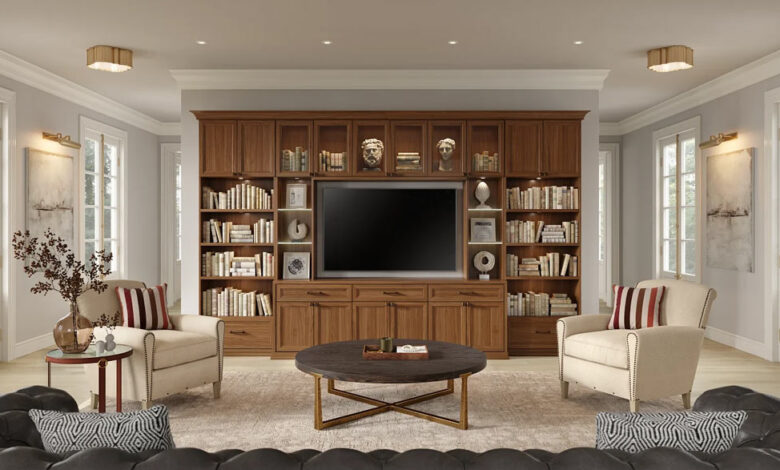
Homeowners generally have the option of choosing between freestanding furniture and built-in arrangements. Freestanding entertainment centers can be easier to move, replace, or rearrange as needs change. They are often suitable for renters or homeowners who prefer flexibility in their interior layout. Built-in designs can create a more integrated appearance by using the available wall space from floor to ceiling or by incorporating shelves and cabinets around the television. Entertainment centers that are custom-designed for a specific wall can provide highly efficient storage and a cohesive architectural appearance. However, built-in solutions generally require more planning and may involve installation work. The right choice depends on the homeowner’s budget, design preferences, storage needs, and long-term plans for the space.
Making the Most of Wall Space
Wall space can provide valuable storage opportunities without taking up excessive floor area. Tall shelving units, wall-mounted cabinets, and vertical storage can help maximize the available space in rooms with limited floor area. Entertainment centers can be designed to extend upward, creating additional locations for books, decorative objects, speakers, and equipment. However, homeowners should avoid filling every available section of the wall because excessive storage can make the room feel visually crowded. A balanced combination of open and closed areas can provide functionality while maintaining a clean appearance. Lighting can also be incorporated into some designs to highlight displays and create a more comfortable atmosphere during evening use.
Lighting and Decorative Features
Lighting can significantly influence the appearance and atmosphere of an entertainment area. Soft accent lighting around shelves or cabinets can highlight decorative objects and create a comfortable environment when the main room lights are dimmed. Entertainment centers with integrated lighting can provide additional visual interest, although electrical components should be installed safely and kept away from areas where heat or moisture could cause problems. Decorative elements such as framed artwork, plants, books, collectibles, and personal photographs can make the entertainment area feel more personalized. Homeowners should avoid overcrowding shelves because leaving some open space can create a cleaner and more sophisticated appearance. The goal is to balance technology, storage, and decoration in a way that feels intentional.
Considering Sound Equipment
Television speakers may be sufficient for casual viewing, but many homeowners use soundbars, speaker systems, or other audio equipment to create a more immersive experience. Entertainment centers should provide adequate space for these components and should not block speaker openings. Audio equipment can require specific placement for effective sound distribution, so furniture design should accommodate those requirements. Larger speaker systems may also require additional floor or shelf space. Homeowners should consider the location of electrical outlets and cable connections before finalizing the furniture arrangement. Planning for sound equipment during the initial design process can prevent the need for major adjustments later.
Entertainment Areas for Families
A family entertainment space often needs to accommodate different activities and users. Children may use the area for games and movies, while adults may use it for television, music, or relaxation. Entertainment centers can provide dedicated storage for controllers, board games, books, remote controls, and other accessories. Cabinets with doors can help keep small items organized and reduce visual clutter. Families should also consider safety when choosing furniture, particularly if young children are present. Heavy units should be appropriately secured when necessary, and televisions should be installed according to suitable safety recommendations. A practical family entertainment area should combine convenience, durability, organization, and safe use.
Maintaining Your Entertainment Furniture
Proper maintenance can help preserve the appearance and functionality of furniture for many years. Dust should be removed regularly, while spills should be cleaned promptly according to the manufacturer’s care instructions. Entertainment centers may also require occasional inspection of hinges, handles, shelves, mounting hardware, and cable openings. Electronic equipment should be kept free of excessive dust because accumulated debris can interfere with ventilation and contribute to overheating. Homeowners should avoid placing items that generate significant heat directly against materials that may be sensitive to high temperatures. Following appropriate care instructions can help protect both the furniture and the equipment stored within it.
Planning for Future Technology
Technology changes quickly, so furniture should ideally provide enough flexibility to accommodate future upgrades. A television may eventually be replaced with a larger model, while new gaming systems, streaming devices, speakers, or smart-home equipment may be added. Entertainment centers with adjustable shelves, accessible cable-management systems, and flexible storage can make future changes easier. Homeowners should avoid designing the space around only the exact equipment they currently own if they expect their technology needs to evolve. Leaving some extra capacity can make upgrades less complicated and reduce the need to replace furniture prematurely. Forward-thinking design can therefore provide better long-term value.
Creating a Comfortable Viewing Environment
The best entertainment area combines technology with comfort. Seating should be positioned so that viewers have a clear and comfortable view of the television without excessive glare from windows or lighting. Entertainment centers can help establish the visual center of the room, but they should not interfere with movement or make the seating arrangement feel restricted. Appropriate lighting, comfortable furniture, organized equipment, and accessible storage all contribute to a pleasant environment. Homeowners should consider how the room feels when the technology is turned off as well as when it is being used. A successful design should complement everyday living rather than making the room feel like a purely technological space.
Conclusion
Choosing the right entertainment furniture requires careful consideration of size, storage, style, materials, technology, cable management, lighting, and long-term flexibility. Entertainment centers can help transform a cluttered media area into an organized and attractive part of the home while providing practical storage for modern equipment. The best choice will depend on the room’s dimensions, the type of technology being used, the homeowner’s design preferences, and the amount of storage required. Careful measurements and thoughtful planning can help prevent common problems and create a more balanced arrangement. Homeowners should also consider future technology upgrades and select durable materials that can withstand regular use. With the right combination of functionality and design, an entertainment area can become a comfortable, organized, and inviting space for relaxation and shared experiences.