
When poor road maintenance contributes to a crash, responsibility may fall on a government agency, contractor, property owner, or another party, depending on who was responsible for maintaining the road and what caused the accident. Proving liability usually requires showing that the responsible party knew, or should reasonably have known, about the dangerous condition and failed to take appropriate action.
A car accident caused by icy roads can become more complicated when the ice resulted from inadequate maintenance, delayed treatment, or a failure to address a known hazard. Snow and ice can naturally create dangerous driving conditions, but evidence about road maintenance may become important when determining whether another party contributed to the crash.
When Can Poor Road Maintenance Lead to Liability?
Roads are maintained by different entities depending on where they are located. A city, county, state transportation department, or another government agency may be responsible for a particular roadway. In some situations, private contractors may also perform snow removal, salting, or other maintenance work.
A claim may arise when a dangerous road condition was not properly addressed and that failure contributed to an accident. For example, if a responsible entity had notice of repeated icy conditions but failed to take reasonable steps to address the hazard, the circumstances may need to be investigated.
However, not every crash caused by snow or ice means that a government agency or other party is legally responsible. Weather conditions can develop quickly, and liability depends on the facts and applicable law.
How Does Notice Affect a Road Maintenance Claim?
One important issue is whether the responsible party knew about the dangerous condition or had enough reason to know about it.
Evidence of notice could include prior complaints from drivers or residents, reports of earlier crashes, maintenance records, weather reports, or evidence showing that the hazardous condition had existed for enough time that it should reasonably have been discovered.
For example, if freezing temperatures had created dangerous conditions for an extended period and maintenance records show that no treatment was performed, those records could become relevant when investigating the crash.
Can a Government Agency Be Held Responsible?
Government agencies may be responsible for maintaining public roads, but claims against them can involve special rules. Many states have laws that provide certain protections or procedural requirements for claims involving government entities.
These requirements can include shorter deadlines, advance notices, or specific procedures for presenting a claim. The rules vary significantly by state and type of government entity.
For example, the Federal Tort Claims Act, 28 U.S.C. § 2674, addresses certain tort claims against the United States, although specific exceptions and requirements can apply. A state or local government road claim may instead be governed by state law.
Because these rules can be different from ordinary personal injury claims, identifying the correct government entity and applicable deadline is important.
What Evidence Can Help Establish Poor Maintenance?
Evidence from the accident scene can be particularly useful. Photographs or videos showing ice, snow, missing warning signs, untreated areas, or other road hazards may help document the condition of the roadway.
Other evidence may include:
- Weather reports from the time of the accident
- Road maintenance and treatment records
- Police accident reports
- Witness statements
- Prior complaints about the road
- Records of previous accidents in the area
- Traffic or surveillance camera footage
- Medical records documenting the resulting injuries
The more clearly the evidence connects the road condition to the crash, the easier it may be to investigate whether poor maintenance played a role.
What Should You Do After a Crash on an Icy Road?
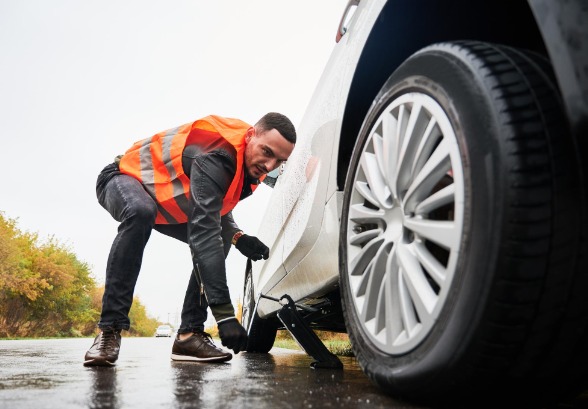
After an accident, seek appropriate medical attention and report the crash when required. If it is safe to do so, take photographs of the roadway and surrounding conditions before the ice or snow is cleared.
It can also be useful to preserve photographs, videos, witness contact information, medical records, and other documents related to the accident. If a government agency or contractor may be involved, getting legal advice promptly can be important because special notice and filing requirements may apply.
Key Takeaways
- Poor road maintenance can potentially contribute to liability for an accident.
- Responsibility may depend on which entity was responsible for maintaining the roadway.
- Evidence of notice about an unsafe condition can be important.
- Weather-related crashes do not automatically establish liability.
- Government claims may involve special procedures and deadlines.
- Photos, weather records, maintenance records, and witness information can help investigate what caused the crash.