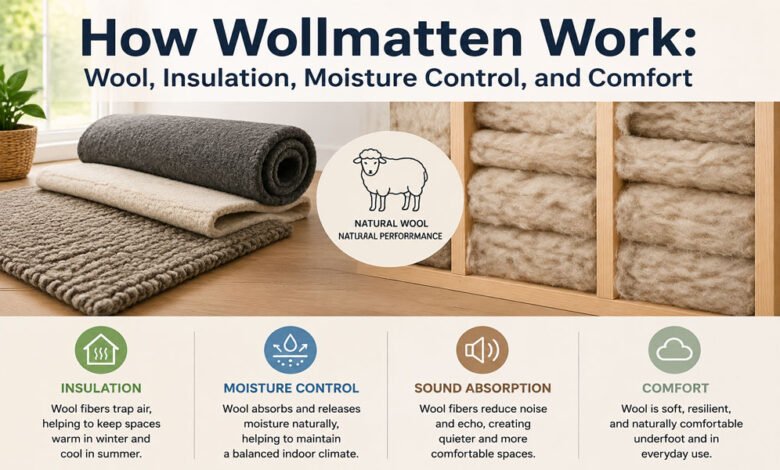

Wollmatten are wool mats made mainly from natural sheep wool. The term can describe decorative floor mats as well as wool insulation mats used inside buildings. People often search for Wollmatten because wool is known for warmth, softness, moisture control, and sound absorption.
This article explains what Wollmatten are, how wool works as an insulating material, where these mats are used, and what makes them different from many synthetic options. It also looks at comfort, moisture control, environmental benefits, maintenance, and practical limits.
What Are Wollmatten?
The German word Wollmatten means wool mats. It is a general term rather than the name of one company, brand, or patented product.
Wollmatten are usually made from sheep wool. Some products contain almost entirely natural wool, while others use wool mixed with other fibers or materials. The exact construction depends on what the mat is designed to do.
There are two common ways the term is used. One refers to wool floor mats placed in rooms for comfort, decoration, warmth, and noise reduction. The other refers to sheep-wool insulation mats placed inside walls, floors, ceilings, and roof spaces.
These two products have different purposes, but they rely on many of the same natural properties of wool. Wool fibers can trap air, handle water vapor, recover after compression, and absorb sound.
Wool itself has been used for clothing, blankets, rugs, and insulation for a very long time. Modern Wollmatten simply use those natural qualities in forms made for flooring or building construction.
How Wollmatten Work
Wollmatten work because of the structure of wool fibers. Wool is not a flat or smooth material. Its fibers have a natural curl, often called crimp, that creates many small spaces between them.
These spaces hold air. Air does not transfer heat very quickly, so the trapped air helps slow the movement of heat through the material. This is one reason wool can help keep a floor feeling warmer and why sheep wool can also work as building insulation.
Wool fibers are also naturally elastic. When they are pressed down, they can often recover much of their original shape. This helps quality wool floor mats resist flattening and can help insulation remain effective when installed correctly.
The uneven and crimped structure of wool also helps absorb sound. Instead of allowing sound waves to move easily across a hard surface, the fibers can reduce some of that energy.
Another important property is moisture control. Wool can take in water vapor from the air and release it again when conditions become drier. This does not make wool waterproof, but it helps explain why Wollmatten are often linked with indoor humidity control.
Thermal Insulation and Temperature Control
Thermal insulation is one of the main reasons wool is useful in Wollmatten. The small air pockets between wool fibers slow heat transfer.
For a wool floor mat, this can make the surface feel warmer than a bare hard floor. This is especially noticeable in bedrooms, living rooms, and other spaces where people walk barefoot or sit close to the floor.
Building-insulation Wollmatten use the same basic principle on a larger scale. They are fitted into parts of a building where heat would otherwise move more easily between indoor and outdoor spaces.
During cold weather, wool insulation can help reduce heat loss. In warmer weather, it can also help slow heat moving into the building from outside. The result can be a more stable indoor temperature.
The exact performance of wool insulation depends on the product. Thickness, density, installation quality, wall construction, climate, and building design all matter.
Wool insulation may reduce heating and cooling demand when it is correctly selected and installed. However, there is no single amount of energy saving that applies to every home or building.
How Wollmatten Control Moisture
Wool has the ability to absorb moisture from the air in the form of water vapor. It can later release some of that moisture when the surrounding air becomes drier.
This process can help moderate changes in indoor humidity. It is one reason wool is often described as a breathable material.
Moisture control is useful in both floor mats and insulation. A wool floor mat can deal with normal changes in indoor humidity, while wool insulation may help manage water vapor inside a building assembly when the whole construction is designed correctly.
However, moisture regulation should not be confused with water resistance. Wollmatten should not be left in standing water or kept wet for long periods.
A soaked wool mat can take time to dry and may lose shape or develop other problems. In building insulation, poor moisture control can also increase the risk of damage to surrounding materials.
For this reason, wool insulation should always be used as part of a properly designed wall, floor, or roof system. Ventilation, vapor control, drainage, and local building conditions still matter.
Comfort and Sound Absorption
One of the most noticeable qualities of Wollmatten used as flooring is their soft feel. Natural wool fibers create a cushioned surface that feels warmer and less hard than many bare floors.
This makes wool mats useful in bedrooms, living rooms, reading areas, children’s rooms, and spaces used for relaxation.
Wool also has useful acoustic properties. Its dense and irregular fiber structure can absorb part of the sound that would otherwise reflect from hard surfaces.
As a floor covering, a Wollmatte may help reduce the sound of footsteps and lessen echoes inside a room. This can be useful in offices, hotels, studios, home workspaces, and multi-level homes.
Wool insulation can also help reduce sound movement through walls, floors, or ceilings. The final level of sound control depends on the thickness of the material and the complete construction of the building.
Sheep-wool insulation is sometimes considered more comfortable to handle than some mineral or synthetic insulation materials. Even so, installers should follow the instructions and safety guidance supplied with the specific product.
Wollmatten as Floor Mats
Flooring Wollmatten are used as practical and decorative coverings. They can add softness and warmth while also helping protect the floor below.
Common places for wool mats include living rooms, bedrooms, hallways, entryways, home offices, reading spaces, hotels, reception areas, and relaxation rooms.
They are also used in children’s rooms because the surface is softer than many hard flooring materials. Some people choose wool mats for yoga or meditation spaces because of their natural cushioning and warmth.
The best type depends on where the mat will be placed. Areas with frequent foot traffic usually need a denser and more durable product. A softer and thicker mat may be more suitable beside a bed or in a low-traffic sitting area.
Thickness also affects practical use. A very thick Wollmatte may provide more cushioning, but it may not fit well under a low door or heavy furniture.
Flooring Wollmatten are available in different colors, textures, sizes, and patterns. Neutral designs can blend quietly into a room, while patterned mats can become a more visible part of the interior.
Wool quality also matters. A well-made mat with strong, dense fibers is more likely to keep its shape and appearance than a lower-quality product.
Wollmatten as Building Insulation
Building-insulation Wollmatten are different from decorative floor mats. They are made specifically to fit into parts of a building where thermal or acoustic insulation is needed.
These products are often sold as mats, rolls, or batts. They may be cut to fit between framing members or placed around irregular areas.
Common installation locations include walls, floors, ceilings, lofts, roof spaces, and spaces around pipes. They may be used in new buildings or added during renovation work.
Sheep-wool insulation can also be used in smaller buildings such as cabins and tiny houses, provided the product meets the technical requirements of the project.
Its flexibility can make it easier to fit around uneven spaces than some rigid insulation materials. However, installation still needs to be accurate. Gaps, compression, and poor moisture control can reduce performance.
Building insulation must also meet local rules for fire safety, thermal performance, and construction. Not every wool product is suitable for every building.
Some insulation Wollmatten are treated to improve resistance to fire or pests. Buyers should check the manufacturer’s technical information rather than assuming that all sheep-wool insulation has the same protection.
Environmental Benefits of Wollmatten
Wool is a renewable material because sheep can grow a new fleece after shearing. This is one reason Wollmatten are often considered by people looking for natural alternatives to synthetic floor coverings or insulation.
Natural wool is also biodegradable under suitable conditions. Some wool products can be reused or recycled, depending on how they were made and whether they contain synthetic backing, adhesives, or other materials.
Another possible advantage is product lifespan. A durable wool mat that remains useful for many years may need to be replaced less often than a short-lived product.
However, wool should not automatically be described as environmentally harmless. Its total impact depends on several factors, including sheep farming, land use, transport, cleaning, processing, dyes, chemical treatments, manufacturing, and disposal.
The environmental value of a Wollmatte therefore depends on the complete product rather than the wool fiber alone. Buyers who care about sustainability can check the wool source, product composition, durability, manufacturing information, and available environmental certifications.
Indoor Air Quality, Allergies, and Mold
Wool is often chosen by people who prefer natural materials indoors. However, the finished product matters more than the fiber alone.
Some Wollmatten may contain dyes, backing materials, adhesives, binders, or protective treatments. These can affect odor, emissions, and indoor air quality. For this reason, buyers should check the full product description rather than assuming that every wool mat is free from synthetic materials.
Wool is also sometimes described as hypoallergenic. This should be treated carefully. A wool product may work well for some sensitive users, but allergies and reactions can depend on dust, cleaning, dyes, treatments, and personal sensitivity.
Regular cleaning is important for floor mats because dust can collect in any textile surface over time.
Wool can help manage moisture in the air, which may reduce damp conditions in some situations. However, wool is not mold-proof. If a mat or insulation layer stays wet for too long, mold can still become a problem.
Good ventilation, proper installation, and quick drying after spills are important.
Fire and Pest Protection
Natural wool has useful heat-related properties, but Wollmatten should not be described as fireproof.
Building insulation products must meet specific fire-performance requirements. Some sheep-wool insulation products are treated to improve fire resistance, but the type of treatment varies by manufacturer.
Pest protection is also important. Natural wool can be damaged by insects that feed on animal fibers. Some insulation products are treated to reduce this risk.
Before buying wool insulation, check:
-
Whether the product has fire-performance testing.
-
Whether it includes pest protection.
-
What treatment has been used.
-
Whether the product meets local building rules.
For floor mats, regular cleaning and proper storage can also help reduce pest problems.
Benefits of Wollmatten
Wollmatten have several useful qualities when the right product is chosen for the right purpose.
Their main benefits include:
-
Natural sheep-wool construction.
-
Soft and comfortable flooring surface.
-
Useful thermal insulation.
-
Good sound absorption.
-
Moisture regulation.
-
Natural elasticity.
-
Good durability when properly maintained.
-
Renewable material.
-
Biodegradability in products with limited synthetic content.
-
Wide choice of colors, textures, and designs.
-
Use in both residential and commercial spaces.
-
Availability as both decorative floor mats and building insulation.
The value of these benefits depends on product quality, construction, and maintenance.
Drawbacks and Limitations
Wollmatten also have limits that should be considered before buying.
High-quality wool products often cost more than many synthetic alternatives. This can make them less suitable for buyers focused mainly on low upfront cost.
Wool also requires more careful cleaning. Harsh chemicals, too much water, and rough treatment can damage the fibers.
Some Wollmatten can fade if they are exposed to strong sunlight for long periods.
Natural wool may also need protection from pests. Building insulation may include additional treatments for fire or insect resistance.
Not every wool mat is made from pure wool. Some products use blends, synthetic backing, or other materials.
Wool should also not be treated as waterproof, mold-proof, stain-proof, or suitable for every allergy sufferer.
Wollmatten vs Synthetic Mats
Wollmatten and synthetic mats can both work well, but they have different strengths.
Wool usually offers a softer feel, better natural moisture regulation, strong thermal performance, and useful sound absorption.
Synthetic mats are often less expensive. Some are also easier to wash and may handle water better than natural wool.
Wool is renewable and biodegradable in suitable forms, while many synthetic fibers are made from petroleum-based materials. However, environmental performance still depends on how each product is manufactured and how long it lasts.
Synthetic mats may be a better choice in very wet areas or where simple cleaning is the main priority.
Wollmatten may be more suitable where comfort, natural materials, warmth, and acoustic performance are more important.
The best option depends on the room, budget, maintenance needs, and expected use.
How to Choose the Right Wollmatten
Start by deciding whether you need a floor mat or building insulation. These products may use the same natural material, but they are made for different purposes.
For flooring, check the wool content, density, thickness, size, and construction. High-traffic spaces usually need denser mats, while bedrooms and low-traffic areas can use softer options.
Measure the space before buying. A mat that is too thick may cause problems with doors or furniture.
Color and pattern also matter for floor mats. Neutral designs can blend into the room, while stronger patterns can create a more visible feature.
For insulation, check technical information rather than appearance. Important details include wool content, thickness, fire performance, pest treatment, thermal performance, and installation requirements.
It is also useful to check independent certifications where available.
Manufacturer instructions should always be reviewed before purchase.
How to Clean and Maintain Wollmatten
Regular care can help floor Wollmatten stay clean and keep their shape.
Vacuum the surface often enough to stop dirt from becoming deeply trapped in the fibers. Use settings and attachments suitable for wool.
If a spill happens, blot it with a clean cloth. Do not rub hard because this can spread the stain or damage the fibers.
Use a mild or wool-safe cleaner when needed. Test any unfamiliar product on a hidden area first.
Avoid soaking the mat. Too much water can affect its shape, backing, and drying time.
Rotate the mat every few months if possible. This helps distribute wear more evenly.
Direct sunlight can fade some wool products, so long periods of strong exposure should be limited.
Professional cleaning may be useful from time to time, especially for larger or heavily used mats. The correct schedule depends on use and manufacturer guidance.
Common Wollmatten Care Mistakes
Common mistakes can shorten the life of a wool mat.
Using strong chemicals is one of the main problems. Wool fibers can be damaged by cleaners that are too harsh.
Rubbing stains is another mistake. Blotting is usually safer.
Using too much water can also cause trouble. Wool can manage humidity, but that does not mean it should be soaked.
Dirt should not be allowed to build up for long periods. Regular vacuuming is simpler than trying to remove deeply embedded dirt later.
Strong sunlight may cause fading, especially if one part of the mat receives more light than the rest.
Storage mistakes can also cause damage. Folding a large mat tightly may create creases that are difficult to remove.
How to Store Wollmatten
A Wollmatte should be clean and fully dry before storage.
Larger floor mats are often better rolled than sharply folded. This can help prevent deep creases and pressure marks.
Store the mat in a dry, clean place. Avoid damp areas because moisture can create odor, staining, or mold.
Natural wool should also be protected from pests during long storage.
If the product has special backing or construction, follow the manufacturer’s storage instructions.
Are Wollmatten Worth It?
Wollmatten can be worth the higher price when comfort, durability, natural materials, and insulation are important.
A good wool floor mat may last for many years when it is properly cleaned and protected from excessive moisture and sunlight.
Wool insulation can also offer useful thermal and acoustic performance when it is correctly installed.
However, wool is not the best choice for every situation.
A synthetic product may be more practical when lower price, easy washing, or stronger water resistance is more important.
The best value depends on quality, intended use, maintenance, and expected lifespan.
Bottom Line
Wollmatten are wool mats used for both floor coverings and building insulation.
Their main strengths come from the natural structure of wool. Wool can trap air, help control moisture, absorb sound, and recover after compression.
These properties make Wollmatten useful for comfort, thermal insulation, and quieter indoor spaces.
They also have limits. Wool can cost more than synthetic materials, needs careful cleaning, and may require protection from moisture, pests, and sunlight.
Choosing the right product depends on whether it will be used for flooring or insulation, how much maintenance is acceptable, and what performance is needed.
(FAQs)
What does Wollmatten mean?
Wollmatten is a German term that means wool mats. It can describe decorative wool floor mats or sheep-wool insulation mats used in buildings.
What are Wollmatten made from?
They are mainly made from sheep wool. Some products use pure wool, while others include blends, backing materials, or protective treatments.
Do Wollmatten keep a room warm?
Yes, wool can help reduce heat transfer because its fibers trap small pockets of air. Floor mats can make a surface feel warmer, while insulation Wollmatten can help reduce heat loss when properly installed.
Can Wollmatten get wet?
Wool can absorb moisture from the air, but it should not stay soaked or sit in standing water. Excess moisture can affect shape, drying, and long-term condition.
Are Wollmatten good for sound insulation?
Wool can absorb sound because of its dense, crimped fiber structure. It may help reduce footsteps, echoes, and some indoor noise.
Are Wollmatten suitable for people with allergies?
It depends on the person and the product. Wool itself may work well for some users, but dust, dyes, treatments, adhesives, and backing materials can also affect sensitivity.
How long do Wollmatten last?
There is no fixed lifespan. Durability depends on wool quality, construction, traffic, moisture exposure, cleaning, and general care.
Are Wollmatten better than synthetic mats?
Not in every situation. Wool usually offers better natural moisture control, warmth, sound absorption, and comfort. Synthetic mats may be cheaper, easier to wash, and more suitable for wet areas.
Valplekar Explained: Meaning, History, Traditions, and Cultural Practices
What Is Masgonzola Made Of? Taste, Nutrition, Storage, and Uses